 Sunrise Marine
Keeping a boat clean between professional details is mostly about small, consistent habits. A quick rinse and wipe-down after each trip goes a long way. These simple steps protect your investment and make your next professional detail easier and more effective.
Why Routine Boat Care Matters
Salt air and saltwater are hard on boats. In Tampa Bay, boats are exposed to sun, salt, and humidity year-round. That combination breaks down gel coat, fades vinyl, and causes mildew fast.
A professional detail like a buff and wax full detail restores your boat's finish. But that work lasts longer when you do basic upkeep in between. Think of it like washing your car between waxes.
Rinse After Every Single Trip
This is the single most important habit you can build. Salt crystals left on surfaces scratch gel coat and corrode metal fittings over time. A fresh-water rinse after every outing removes salt before it can do damage.
Use a garden hose at low pressure. Hit the deck, hull sides, outboard or stern drive, cleats, and any raw metal hardware. Don't forget the trailer if you use one.
Dry Your Boat Thoroughly
Standing water causes water spots on gel coat and glass. It also creates the damp conditions that mildew loves. After rinsing, use a chamois or a soft microfiber towel to dry the deck and console.
Pay special attention to the bilge area and any low spots where water collects. Leaving hatches cracked open slightly helps air circulate and keeps things dry inside.
What Is Oxidation? Oxidation Is the Chalky Fading You See on Gel Coat
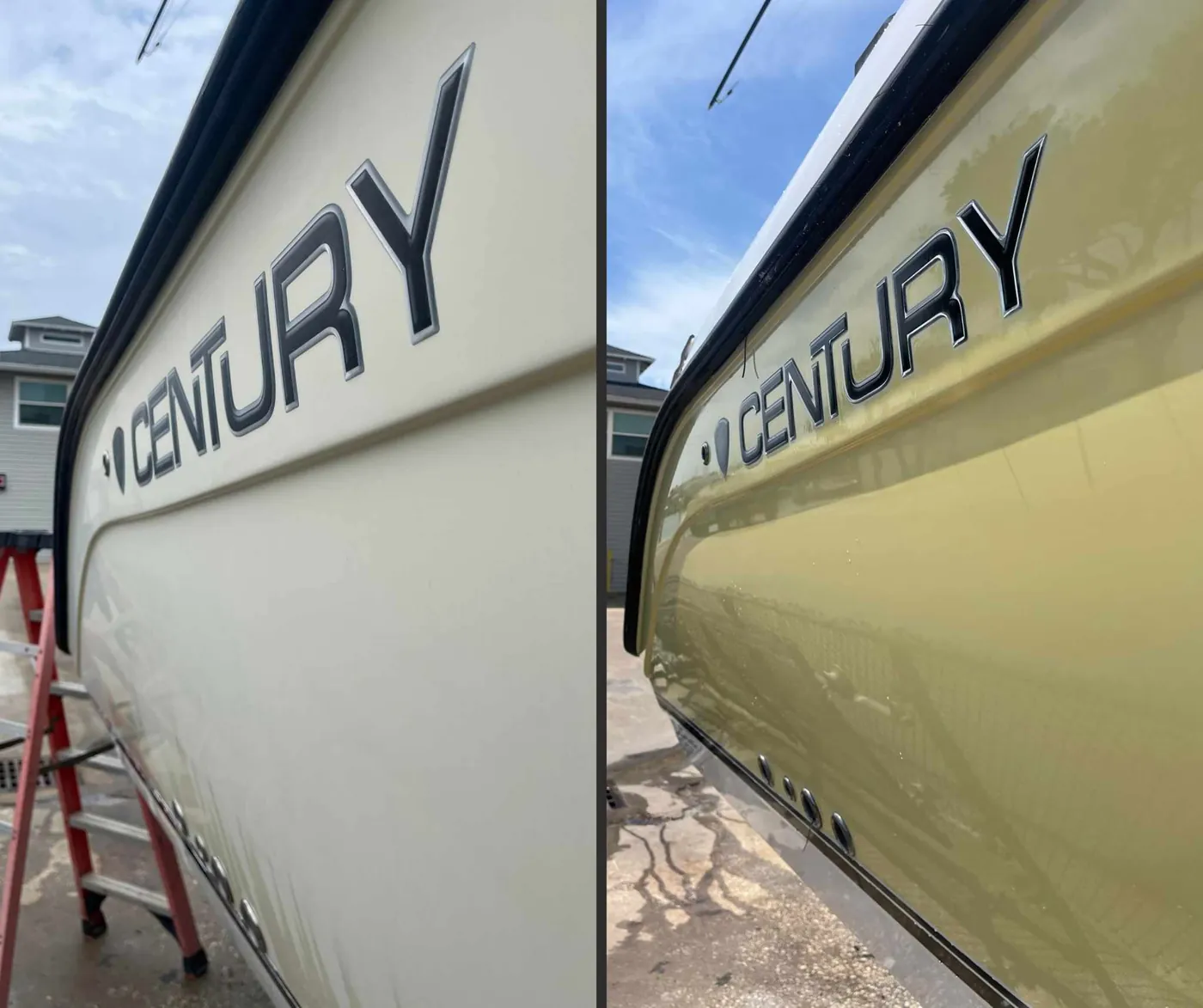
Oxidation is the breakdown of your boat's gel coat surface caused by UV exposure. It shows up as a dull, chalky, or faded look on the hull and deck. The Florida sun accelerates this process significantly.
You can slow oxidation between details by keeping a light coat of wax on gel coat surfaces. Wax acts as a sacrificial barrier between UV rays and your gel coat. If oxidation has already set in, professional oxidation removal is the right fix before any wax is applied.
Keep Vinyl and Upholstery Clean
Marine vinyl takes a beating from sun, sweat, sunscreen, and fish blood. Wipe seats down after every trip with a damp cloth. Once a week, use a gentle marine vinyl cleaner to remove built-up grime.
Sunscreen is one of the worst offenders. It soaks into vinyl quickly and is very hard to remove once it sets. Wipe it up as soon as you see it.
Mildew spots on vinyl are common here in Pinellas County. Catch them early. A mild cleaner and a soft brush handle small spots easily. Ignoring them leads to staining that requires a professional deep cleaning to correct.
Ready for a showroom shine?
Free quote, mobile to your dock across Tampa Bay. Same-week booking.
Use a Cover When the Boat Sits
A good boat cover is one of the best investments you can make. It blocks UV rays, keeps bird droppings off, and reduces how much dirt and pollen settle on surfaces. Less buildup means less scrubbing later.
Make sure the cover fits snugly. A loose cover that flaps in the wind can actually scratch your gel coat. If your boat lives in a slip, a mooring cover designed for that purpose works well.
Simple Weekly Checklist
- Rinse with fresh water after every use.
- Dry the deck and console with a microfiber cloth.
- Wipe down vinyl seating and remove sunscreen residue.
- Check the bilge for standing water and odors.
- Inspect metal hardware for early rust or corrosion.
- Cover the boat whenever it sits unused.
Consider a Ceramic Coating for Easier Long-Term Maintenance
If you want daily upkeep to be even easier, a ceramic coating is worth learning about. Ceramic coatings bond to gel coat and create a slick surface that repels water, salt, and grime. Dirt rinses off much more easily than it does from bare gel coat.
This does not mean you skip rinsing or drying. It does mean less scrubbing and better protection from UV and saltwater over time. It is a good option for boaters who spend a lot of time on the water here in Tampa Bay.
Schedule Recurring Maintenance Washes
Even with great daily habits, boats need professional attention regularly. Recurring maintenance washes keep salt film, algae, and oxidation from building up between full details. They are quicker and simpler than a full detail because the boat is never allowed to get truly dirty.
Think of these as tune-ups for your boat's appearance. They protect the work done during your last full detail and delay the need for heavier restoration services.
A Note on DIY Products
Use products made specifically for marine use. Household cleaners can strip wax, damage vinyl, or leave residue that attracts dirt faster. Read labels and avoid anything with harsh solvents unless you know what you are doing.
Soft brushes and microfiber cloths are your best tools. Abrasive scrub pads scratch gel coat and create tiny grooves where dirt hides.
Ready for Your Next Professional Detail?
Sunrise Marine Detailing serves boat owners across the Tampa Bay area, including communities like Tampa and Tarpon Springs. The crew comes to your dock or slip, so there is no hauling required. Whether you need a maintenance wash, a full detail, or oxidation removal, contact us to get a quote based on your boat's size and condition.
FAQ
How often should I rinse my boat?
Rinse with fresh water after every outing, especially in saltwater. Salt left on surfaces causes long-term damage to gel coat, metal hardware, and upholstery. It only takes a few minutes and makes a big difference over time.
Can I wax my boat myself between professional details?
Yes, you can apply a light coat of marine wax yourself between professional details. Use a product made for gel coat and follow the label directions. If your gel coat is already faded or chalky, professional oxidation removal should come first, otherwise wax will not bond or protect properly.
How do I prevent mildew on boat upholstery?
Keep vinyl clean and dry. Wipe it down after every trip and leave covers open or cracked when possible so air can circulate. Catch mildew spots early with a marine vinyl cleaner and a soft brush before they stain deeply into the material.
Does a ceramic coating mean I don't have to clean my boat as often?
A ceramic coating makes cleaning easier because surfaces repel water and grime more effectively. However, you still need to rinse after saltwater use and wipe down surfaces regularly. The coating reduces effort and extends protection, but it does not eliminate routine care.
How do I know when my boat needs a professional detail versus a maintenance wash?
A maintenance wash handles light salt film, dust, and surface dirt. If you notice dull or chalky gel coat, stubborn stains, heavy mildew, or faded vinyl, those are signs you need a more thorough professional detail. When in doubt, describe what you are seeing and ask for a recommendation based on your boat's actual condition.