 Sunrise Marine
You can keep boat stainless looking good with a simple routine. Rinse it with fresh water after each trip. Wash it with mild soap, remove stains gently, dry it, and add a protective layer.
Saltwater is tough on metal. A little regular care goes a long way.
Why Saltwater Is Hard on Boat Stainless Steel
Stainless steel resists rust because of a thin layer on its surface. Salt, heat, and humidity can wear that layer down. Stainless is rust resistant, but it is not rust proof.
Salt that dries on rails, cleats, and hinges leaves a crust. That crust holds moisture against the metal. Spots form fastest in places with little airflow, like under fittings and around bolts.
What Is Tea Staining?
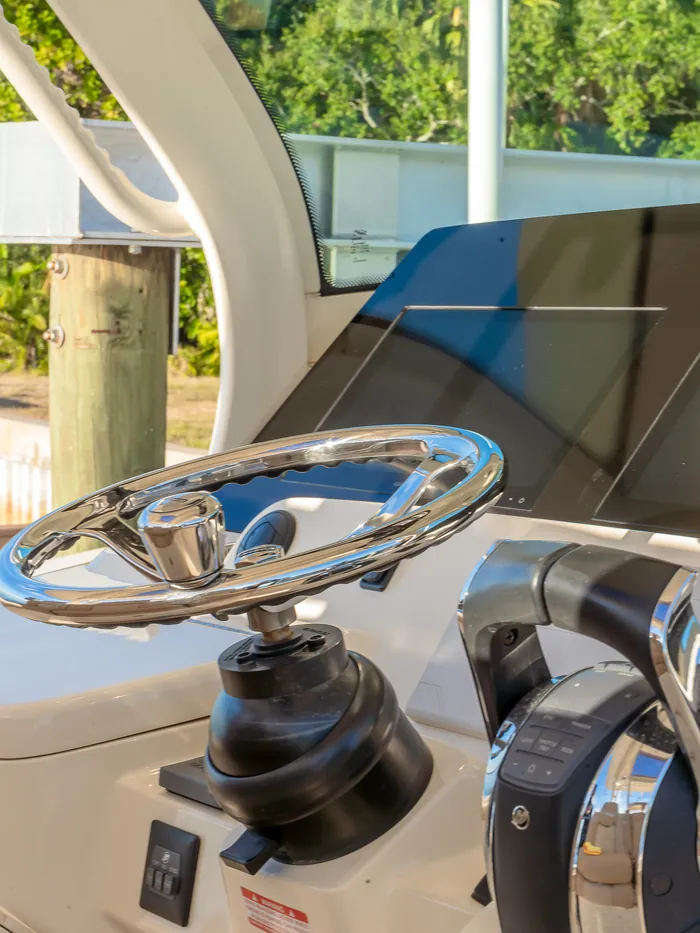
Tea staining is a brown or orange film that shows up on stainless steel. It looks like rust, but it often sits only on the surface. Salt and moisture usually cause it.
If you catch it early, you can often wipe it away. If you wait, it can come back faster and harder to remove.
What You Need
- A hose with fresh water
- Mild boat wash soap
- Soft microfiber towels
- A soft brush or non-scratch pad
- A stainless cleaner or polish made for marine use
- A protective wax or sealant safe for metal
How to Clean Stainless Steel on a Boat
Step 1: Rinse With Fresh Water
Rinse every piece of stainless after you come in. Cover rails, cleats, hinges, ladders, and bow fittings. This removes loose salt before it dries.
Step 2: Wash With Mild Soap
Mix a gentle boat soap with water. Wipe the metal with a soft towel or brush. Work in the direction of the grain, if you can see one.
Rinse well. Soap left behind can attract dirt.
Step 3: Treat Stains and Rust Spots
Apply a marine stainless cleaner to a towel or soft pad. Rub gently on the stain. Follow the label for contact time, and never let the cleaner dry on the surface.
Rinse with fresh water right after. Test any product on a small spot first.
Step 4: Dry and Polish
Dry the metal with a clean microfiber towel. Standing water leaves spots. A light polish can bring back the shine and smooth the surface.
Step 5: Add Protection
Apply a thin coat of wax or sealant made for metal. Buff it off with a clean towel. This layer helps salt and water rinse off more easily next time.
Reapply it on a regular schedule. How often depends on how much you use the boat and where you keep it.
Common Mistakes to Avoid
- Steel wool: It can leave tiny iron bits that rust.
- Bleach or chlorine cleaners: They can harm stainless and nearby surfaces.
- Rough scrub pads: They scratch the metal, and scratches hold salt.
- Letting cleaner dry: It can leave streaks or damage.
- Skipping the rinse: Salt left on the metal starts the problem again.
Ready for a showroom shine?
Free quote, mobile to your dock across Tampa Bay. Same-week booking.
Protect the Gelcoat Around Your Hardware
Rust runs can stain the gelcoat under rails and cleats. Over time, sun and salt can also leave gelcoat chalky and dull. Our boat oxidation removal service may help restore the finish around your hardware.
Some owners also add a ceramic coating for boats as an extra protective layer. It can make rinsing easier. Results vary by surface, product, and how you use the boat.
Build a Simple Routine
Consistency matters more than any one product. Try this schedule:
- After every trip: Rinse all stainless with fresh water.
- Every few weeks: Wash and dry the metal. Check for early spots.
- Every few months: Polish and add a fresh protective layer.
If you would rather hand off the work, recurring boat maintenance washes can keep the routine on track.
When Cleaning Is Not Enough
Some damage needs more than a cleaner. Look for small pits, cracks, or rust near welds. Watch for loose rails or fittings, too.
These can signal a structural issue. Have a qualified marine technician inspect them. Do not rely on polish to fix them.
Stainless Care in Tampa Bay
Warm weather, strong sun, and salty air make care important all year. Boats on the Gulf and the bay see salt often. If you need boat detailing in Tampa, our crew can come to your dock or slip.
Ready for Help?
Sunrise Marine Detailing is a mobile boat detailing company based in St. Petersburg. We serve Pinellas County and coastal towns around Tampa Bay. Contact us for a quote. The cost varies by boat size and condition.
FAQ
How often should I clean stainless steel on my boat?
Rinse it with fresh water after every saltwater trip. Do a full wash and dry every few weeks. Polish and protect it every few months, or more often if you see spots.
Can stainless steel rust on a boat?
Yes. Stainless resists rust, but salt and moisture can break down its surface layer. That is why regular rinsing and drying matter so much.
Is tea staining the same as rust?
They look alike, but tea staining is often only on the surface. It can often be cleaned off if you catch it early. Deep or repeating rust may point to a bigger issue.
Can I use household cleaners on boat stainless?
It is safer to use products made for marine use. Harsh cleaners, bleach, and abrasive pads can damage metal and nearby surfaces. Always test a small spot first.
Does a ceramic coating help stainless steel?
A coating can add a protective layer that makes rinsing easier. Results vary by product, surface, and use. Ask your detailer what fits your boat and its hardware.