 Sunrise Marine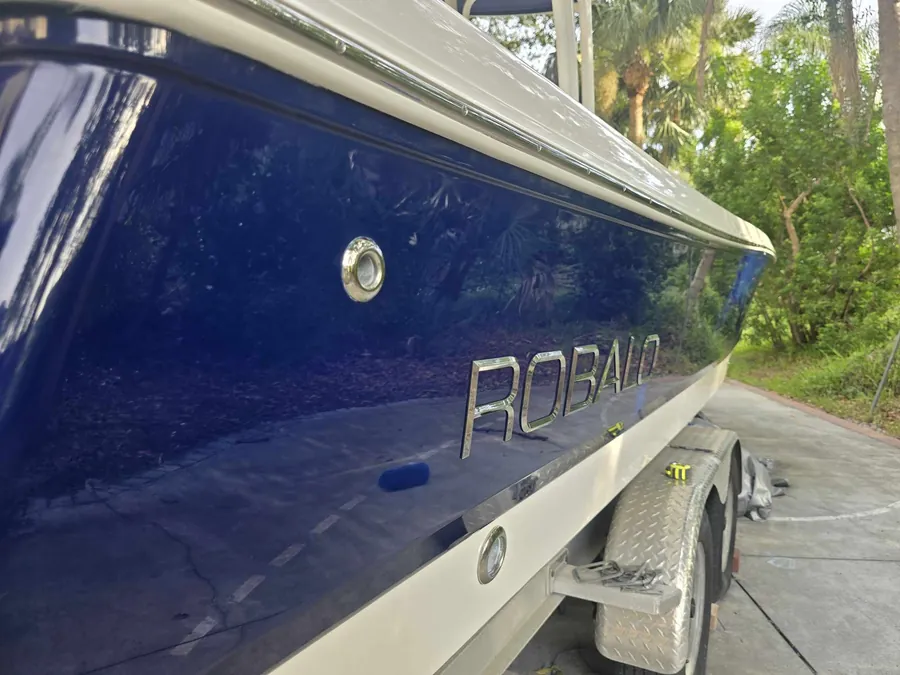
If you keep a boat in Dunedin, you already know what the waterline looks like after a few weeks sitting in St. Joseph Sound or tied up at Dunedin Marina. Boat hull cleaning in Dunedin is not just about appearances. It is about protecting your investment from the relentless combination of salt, sun, tidal fluctuation, and biological growth that this stretch of Florida coastline delivers year-round. The water here is warm, the salinity is high, and the sun bakes everything above the waterline into a chalky, stained crust faster than most boat owners expect. Whether you keep your vessel on a lift, at a slip, or on a trailer you back down at Edgewater Park, the hull tells the whole story. At Sunrise Marine Detailing LLC, we clean hulls the right way, using the right chemistry for Florida conditions. Read on to learn what is involved, then reach out for a free quote. For the full picture of how this fits with our recurring Captain's Wash maintenance program, or to see how we handle a nearby spot like Dunedin, keep reading.
Why Dunedin Boats Need Boat Hull Cleaning
Dunedin sits right on the edge of some of the most beautiful and most demanding boating water in the entire state. St. Joseph Sound stretches out to the west, and the channels that run between Honeymoon Island and Caladesi Island funnel tidal flow through on every cycle. That tidal movement means the water is constantly pushing salt, biological material, and fine sediment against your hull, every single day. Boats that see regular use through these channels pick up a thick ring of waterline scum quickly, especially during the warmer months from April through October when water temperatures push algae and barnacle larvae into overdrive. The gel coat on a fiberglass hull, which is the outer skin protecting everything underneath, is porous enough that salt crystals work their way into micro-scratches and oxidize the surface from the inside out if they are not removed on a consistent schedule. That is not a cosmetic problem, that is a structural degradation issue that compounds over time.
The storage situation in Dunedin also matters a lot. Some boat owners here keep their vessels on floating docks at Dunedin Marina, where the hull sits in saltwater twenty-four hours a day and the waterline scum line builds up fast. Others use dry storage or trailering, which gives the hull more air time but means every launch deposits a fresh coat of salt and algae spores on the hull surface. Pontoon boat owners who run out through the Honeymoon Island channel toward Caladesi Island deal with a specific challenge: the aluminum pontoons and the fiberglass deck structure both need different treatment chemistries, and the brackish areas near the mangroves leave a particular kind of greenish-brown biological stain that standard car-wash soap will not touch. Center consoles, bay boats, and offshore boats all have their own hull geometry, their own drain systems, and their own waterline heights that require different approaches. There is no one-size-fits-all scrub for a Dunedin boat. Knowing the local water and the local boat types is a big part of doing this job correctly.
The Florida sun is also part of the problem in a way that people who are new to boating in this region sometimes underestimate. Ultraviolet radiation in Pinellas County is intense, and it attacks the oxidation inhibitors in gel coat and painted surfaces continuously. When you combine UV degradation with salt crystallization and the organic acids that algae and barnacle slime produce as they grow, you get a surface that looks terrible and is actively breaking down. A boat that sits uncleaned at a Dunedin slip for an entire season can develop heavy oxidation, hard mineral scale, and even surface pitting that requires professional correction to address. Regular boat hull cleaning removes the biological and mineral contamination before it has a chance to etch the surface permanently. It also gives you a clean baseline so that wax and sealant coatings applied during a full detail actually bond correctly instead of sitting on top of a layer of salt and grime. Bottom line: Dunedin's water, sun, and storage conditions make consistent hull cleaning one of the highest-value maintenance habits you can build as a boat owner here.
What's Included in Our Boat Hull Cleaning Service
- Waterline scum removal: The dark, greasy band that forms at the waterline is a combination of diesel exhaust residue, sunscreen oils that come off swimmers, algae, and oxidized wax. We use a dedicated waterline cleaner with surfactants designed to cut through that specific mixture without damaging the underlying gel coat. This step alone makes the biggest visible difference on most boats, turning a dark, dingy stripe back into a clean, bright hull edge that looks like the boat was just washed from the factory.
- Marine growth and slime treatment: Green and brown algae slime, soft barnacle clusters, and the early stages of hard growth all respond to different chemistry. We apply a biological decontaminant that kills and lifts organic material from the surface without requiring abrasive scrubbing that could scratch the gel coat. For boats that have been sitting a while in warm Florida water, this step may involve multiple applications and dwell time to get the hull surface fully cleared of biological contamination before we move forward.
- Salt residue flush and rinse: Salt does not just sit on the surface; it works into every seam, every fitting, every non-skid texture, and every unsealed gap around hardware. We do a thorough fresh-water rinse that targets all of those areas, not just the open hull panels. We pay special attention to the waterline molding, the anchor locker drain, the bilge drain area, and any horizontal surfaces where salt crystals accumulate and sit in direct sun. Getting the salt fully off is the step that prevents the white, chalky hazing that comes back so quickly on boats in this part of Florida.
- Hull surface decontamination with iron remover: Rust particles from marina infrastructure, from trailers, and from your own hardware get embedded in the gel coat over time. These particles oxidize and leave orange or brown staining that looks like rust bleed from the inside but is actually surface contamination. An iron-specific chemical decontaminant reacts with these particles and encapsulates them so they can be rinsed cleanly away. This step is something most DIY hull washing skips entirely, and it makes a measurable difference in how clean and uniform the hull surface looks after the job is complete.
- Non-skid surface cleaning: The textured non-skid areas on your deck and gunwales trap everything. Salt, sunscreen, fish blood, bait residue, and biological material all pack into those textured patterns and are almost impossible to remove with a standard rinse. We use a soft-bristle brush with a pH-balanced cleaner to work out the contamination from the texture without breaking down the non-skid pattern itself. Clean non-skid also grips better, which is an important safety point on a wet boat deck.
- Bottom paint inspection and touch-up pairing: Boat hull cleaning above the waterline pairs naturally with a visual inspection of your bottom paint condition. While we do not replace bottom paint as part of the cleaning service, we will flag any areas where the paint is thinning, flaking, or showing bare spots, and we can coordinate a bottom paint touch-up to run alongside the cleaning service. Dunedin boat owners who keep their vessels in the water full-time especially benefit from having both addressed together so they are not pulling the boat twice in the same season.
- Post-clean protective rinse and surface wipe-down: After all the cleaning chemistry has been applied and rinsed, we do a final fresh-water wipe-down of the hull surface to neutralize any remaining chemical residue and confirm the surface is clean and uniform. If you are planning to have wax or a ceramic coating applied afterward, this step ensures the surface is properly prepped and that nothing is left behind that would interfere with bonding. We leave the hull dry, clean, and ready for whatever the next step in your maintenance plan looks like.
While we are at it, ask about our oxidation removal, a lot of Dunedin customers pair this with their detail to extend the results.
Our Process for Dunedin Boats
Step 1: Assessment and Free Quote
Every boat hull cleaning job in Dunedin starts with a quick conversation about your boat and where it lives. We want to know the hull length, the hull material (fiberglass, aluminum, painted), how long it has been since the last cleaning, and whether it is on a lift, in a slip, or on a trailer. That information lets us give you an accurate quote without having to hedge. We may ask for a few photos if the boat is at a marina slip so we can assess the waterline condition before we show up. If you are at Dunedin Marina or another local facility, we can often swing by for a quick in-person look on the way to another job in the area. The goal is to arrive prepared with the right products and the right amount of time blocked for your specific boat.
Step 2: Site Prep and Product Staging
When we arrive at your boat, the first thing we do is a walk-around assessment in person to confirm what we saw in photos or discussed over the phone. We check the waterline condition, look for any surface damage or previous repairs we need to work around, and note any hardware or trim that needs to be masked or kept dry. We stage our products and equipment before we touch the boat, which means the job runs more smoothly and we are not running back to the truck mid-process. For boats at a dry-storage facility or a private dock, we just need access to a water source at the site, so let us know if there is a good hose connection available and the job never gets held up by a logistical gap.
Step 3: Hull Treatment and Cleaning
This is where the actual work happens. We work systematically from bow to stern, starting with the waterline band and working outward. Chemical products are applied in the correct order: biological treatments first, then iron decontaminant, then the waterline scum remover, then the overall hull wash and rinse. Each product gets its required dwell time before we agitate or rinse, because cutting that dwell time short is what causes a lot of DIY hull cleaning attempts to produce underwhelming results. We use soft mitts, non-abrasive pads, and soft-bristle brushes matched to the specific surface we are working on. Nothing abrasive touches the gel coat during a standard cleaning service. The non-skid sections and any trim areas get their own specific attention during this step as well.
Step 4: Final Inspection and Client Walkthrough
Before we pack up, we do a complete walkthrough of the entire hull surface in good light, looking for any spots that need a second pass and confirming the surface is uniformly clean. If we are working at a location where the boat owner is present, we do the walkthrough together so you can see the result before we leave and ask any questions about what we found or what we recommend for follow-up care. We will also give you a realistic heads-up about how quickly the waterline will start to show contamination again based on your storage situation and how often you are in the water. For most Dunedin boats kept in full-time slips in warm months, that is typically four to eight weeks before the next cleaning becomes worthwhile, though that varies considerably by boat use and slip location.
Boats and Marinas We Service Around Dunedin
Dunedin is a compact but very active boating community, and the range of boats we see here reflects the variety of water available. From the protected flats inside St. Joseph Sound to the Gulf passes near Honeymoon Island and Caladesi Island, there are boats of every size and style keeping slips and mooring spots in this area. We service boats at the following locations and waterways regularly, and our familiarity with each site helps us work efficiently without slowing down marina operations or getting in the way of other boaters.
- Dunedin Marina: The city-run marina on St. Joseph Sound is one of the busiest facilities in the area. We work around the slip layout and the daily traffic from charter boats, sailboats, and recreational powerboats that keep this marina active throughout the week. The floating dock environment here means hulls are in constant saltwater contact, and waterline buildup happens faster than at dry-storage facilities.
- Edgewater Park launch area: Many Dunedin boat owners use this public launch to get trailered boats in and out of the water. We work with trailered boats before or after launch, and the park's open-air layout gives us good access to the entire hull without the space constraints of a covered slip.
- Honeymoon Island channel access points: Boats that run regularly through this channel pick up a specific pattern of biological fouling due to the high tidal exchange in this area. We are familiar with what that looks like and how to address it efficiently.
- St. Joseph Sound waterfront properties: Dunedin has a number of private docks along the Sound where residents keep their boats at home. We service private dock boats regularly and are set up to bring everything we need to a residential waterfront property.
- Caladesi Island area vessels: Boats that regularly run to and anchor near Caladesi Island deal with a mix of open Gulf saltwater and the calmer estuarine water inside, which creates a specific combination of hard mineral scale and soft organic growth on the hull.
- Dry-stack and trailer storage facilities in Dunedin and Clearwater: We also clean boats that are stored out of the water but still accumulate salt haze, biological staining from rain splash, and waterline residue from periodic launching. Dry-stored boats are often easier to access and can be cleaned faster than in-water boats.
Common boat types we see in Dunedin include bay boats in the 18 to 24-foot range, center consoles up to 30 feet, flats boats, pontoon boats, sailboats from 25 to 40 feet, and larger offshore fishing rigs that stage out of Dunedin before runs to deeper Gulf water. We are comfortable working on fiberglass gel coat, painted hulls, aluminum pontoon tubes, and Awlgrip-finished boats. If you have something a little unusual, just mention it when you reach out and we will let you know what we need to bring.
Ready for a showroom shine?
Free quote, mobile to your dock across Tampa Bay. Same-week booking.
How Long Boat Hull Cleaning Takes in Dunedin
One of the most common questions we get from Dunedin boat owners is how long the job will actually take, because most people are working around tide windows, marina access restrictions, or their own schedule for getting back on the water. The honest answer is that time depends heavily on boat size, how much contamination has built up, and whether we are working on a boat in the water versus a trailered or lifted boat where we have full access to the hull.
For smaller boats under 25 feet, a standard hull cleaning that addresses the waterline, non-skid, and hull surface typically takes between one and a half to two and a half hours. That includes the chemical dwell times, which cannot be rushed without losing effectiveness. Bay boats, flats boats, and small center consoles in this size range are the most common boats we see in Dunedin, and the majority of these jobs are single-technician work that we can schedule and complete on the same day in most cases.
Boats in the 25 to 35-foot range, including mid-size center consoles, larger bay boats, and smaller sailboats, typically take between two and a half and four hours depending on condition. A boat that has been sitting in a Dunedin slip all summer without attention will take longer than the same boat coming in for a routine cleaning after four to six weeks. For boats in this range, we often find that the initial cleaning takes longer than subsequent maintenance cleanings, because the first pass has to deal with accumulated contamination that a maintenance schedule prevents from building up again.
Larger boats over 35 feet, including offshore fishing boats, larger sailboats, and bigger cruisers, typically require four to six hours or more depending on the specific hull configuration and the level of contamination present. These jobs may require two technicians to complete in a reasonable window, and we factor that into the quote. For full-day jobs on larger vessels, we plan our schedule to arrive early and work through a structured sequence so nothing gets rushed at the end of the job when light or tide is changing.
For the majority of Dunedin boat owners with boats in the under-35-foot range, same-day turnaround is standard. We schedule cleanings in the morning or early afternoon to take advantage of cooler surface temperatures, which actually improves how cleaning chemistry performs on the hull. Hot gel coat in direct afternoon sun can cause some products to flash off too quickly to work properly. We plan our arrival times with that in mind so every job gets the same quality result regardless of when in the day it happens.
Before and After: What to Expect
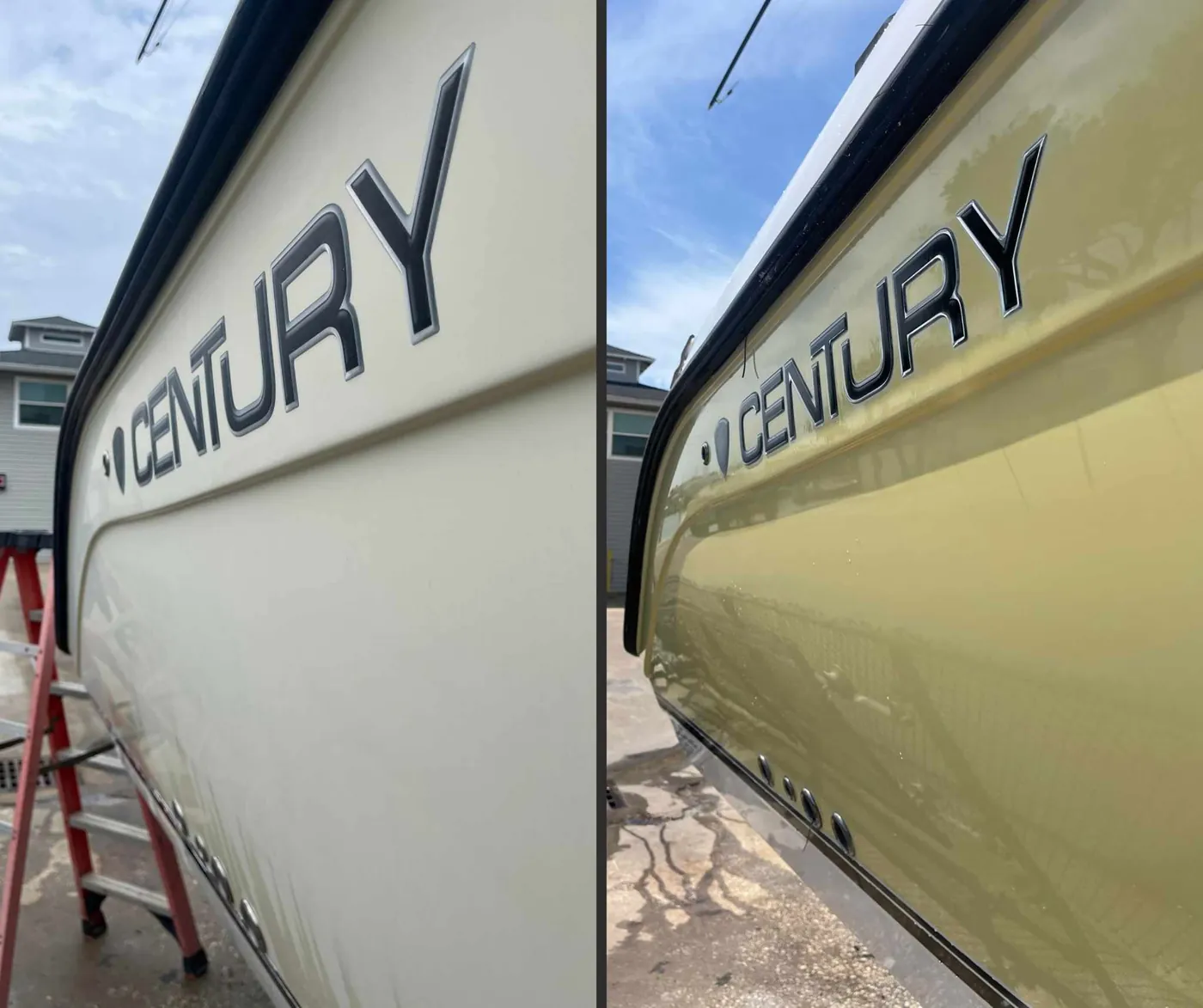
If you have never had a professional hull cleaning done on a boat that has been sitting in Florida water for a while, the transformation can be genuinely surprising. The most obvious change is the waterline band. Before cleaning, this area is typically a dark brown or grayish-black strip that runs the full length of the boat right at the water surface. It is made up of layered biological material, oxidized wax, diesel and exhaust residue from nearby vessels, and mineral scale from the water itself. After cleaning, that band is gone and the hull color below the rubrail looks consistent and bright from bow to stern. On a white or light-colored hull, the difference between the before and after state is dramatic, and it is often the first thing other boaters comment on when they see the boat after a cleaning.
The gel coat surface itself also looks noticeably better after the contamination layer is removed. Florida sun causes a process called oxidation in fiberglass gel coat, where the surface slowly loses its depth and gloss and takes on a dull, chalky appearance. When that oxidized surface is also covered in a layer of salt haze and biological staining, the hull can look years older than it actually is. After a thorough cleaning, the surface does not become fully restored the way it would after polishing and waxing, but the contamination that was masking the natural color and depth of the gel coat is removed. Many boat owners are surprised to find that their hull is actually in much better shape than the dirty surface was suggesting. The white looks whiter, the colored graphics look more saturated, and the overall profile of the boat looks cared-for rather than neglected.
The non-skid areas, the hardware surrounds, and the rubrail itself also show a clear improvement. Non-skid that was packed with dark residue and staining looks cleaner and the texture pattern becomes visible again instead of being obscured by grime. Stainless fittings that had brown rust contamination blooms around their bases look cleaner once the iron decontaminant step lifts those particles away. The rubrail, which takes a beating from dock lines and regular impacts, tends to hold a lot of biological staining in its molded channels, and after cleaning those channels look clean and consistent rather than streaky and dark. The overall impression is that the boat has been properly maintained, which is exactly the point. It is worth setting realistic expectations here: a cleaning service removes contamination and restores the baseline condition of the surface. It does not remove deep scratches, heavy oxidation, or gelcoat fading that has progressed beyond the point where cleaning alone can address it. Those issues are addressed with polishing and compound work, which is a separate service we can discuss if it applies to your boat.
What Dunedin Boat Owners Ask
How do I schedule a boat hull cleaning service with Sunrise Marine Detailing?
The easiest way to get scheduled is to call or text us directly. We keep our scheduling straightforward: you reach a real person, give us the basic details about your boat and where it is located, and we put together a quote and a time that works for both of us. For boats at Dunedin Marina or other managed facilities, we can coordinate with the marina office to make sure we have access on the day we are coming. For private docks and dry-storage locations, just let us know the address and any access notes. We try to confirm all bookings at least twenty-four hours in advance so there are no surprises on either side. You can also reach out through our website contact form if calling or texting is not convenient.
Do you clean all boat types and hull materials?
Yes, with some important details worth knowing. We work on fiberglass gel coat, painted fiberglass, aluminum hulls and pontoon tubes, and composite materials used on modern center consoles and bay boats. Each material needs slightly different chemistry and technique, and we adjust our approach accordingly. For example, aluminum pontoon tubes need pH-neutral or mildly alkaline cleaners rather than the acidic products sometimes used on fiberglass, because acid will etch and darken aluminum quickly. Painted hulls, especially those with Awlgrip or other two-part linear polyurethane coatings, require careful product selection to avoid lifting or dulling the paint finish. When you contact us, mention the hull material and any previous paint or coating work so we can confirm the right product selection before we arrive at your boat.
How often should I get boat hull cleaning in Dunedin?
For boats kept in a full-time slip in Dunedin's warm saltwater environment, most owners find that a cleaning every four to eight weeks during the peak warm-water season keeps the waterline from building up into a heavy contamination problem. From roughly November through February, the cooler water slows biological growth enough that you can stretch that interval to every eight to twelve weeks without the same level of buildup. For trailered boats that spend more time on the trailer than in the water, the schedule is less aggressive because the hull is not in constant contact with the water and the growth cycles are interrupted. The honest answer is that the right interval for your specific boat depends on how you use it and where it is stored, and we are happy to give you a personalized recommendation based on your situation when you call.
How does your pricing work and how do I get a quote?
We provide free quotes after a quick conversation about your boat and your timeline. We do not publish flat rates because the actual scope of a hull cleaning varies enough based on boat size, contamination level, hull material, and site logistics that a generic number would not be meaningful or fair to you. What we can tell you is that our quotes are specific to your boat and situation, and we walk you through exactly what is included before you commit to anything. There are no surprise add-ons at the end of the job. If we find something during the cleaning that suggests an additional service would benefit your boat, we will tell you what we found and what it would cost before we do anything beyond the original scope.
Do you work at private docks in Dunedin, or only at marinas?
We work at private docks regularly and actually find them easier to work at in many cases because there is no time pressure from marina traffic or slip neighbors. If you have a home on St. Joseph Sound or along any of the Dunedin waterfront canals with your own dock, we can come directly to you. We connect to the water at your dock for rinsing, so just point us to a convenient hose, and we take care to leave the dock area as clean as we found it when we are done. Just let us know the access situation when you reach out, including whether the dock has power or water available, and we will plan accordingly.
Service Areas Nearby
While Dunedin is our focus for boat hull cleaning along this stretch of the Pinellas County waterfront, we also travel to nearby communities across the Tampa Bay region to serve boat owners who want the same level of attention to their vessels. We regularly detail and clean boats kept in Clearwater and Clearwater Beach, just south of Dunedin along the Intracoastal Waterway, where the volume of recreational and charter boats creates a steady need for professional hull maintenance. Safety Harbor on the eastern shore of Old Tampa Bay is another community we serve regularly, particularly for sailboats and larger powerboats that keep slips at the facilities there.
We also serve nearby areas, see Dunedin or Pinellas Park for the same boat hull cleaning work.
Palm Harbor, which borders Dunedin to the north, has a growing number of boat owners keeping vessels in small private marinas and community boat ramps along Lake Tarpon and the Intracoastal, and we make regular trips to that area. Tarpon Springs, further up the Pinellas coast, is a working waterfront community with a strong boating culture, and we work on everything from sponge-diving vessels to modern bay boats in that area. Oldsmar and the Upper Tampa Bay area also fall within our regular travel range for larger jobs or clients who use our services on a scheduled maintenance basis.
Down the coast, we also serve Largo, Seminole, and the Madeira Beach and Indian Rocks Beach waterfront communities where the Intracoastal provides dock access for hundreds of recreational boats. If you are in any of these areas and looking for the same quality of hull cleaning service we provide to Dunedin boat owners, we are able to accommodate you. We also detail boats at storage facilities throughout Pinellas County, so even if your boat is stored inland between seasons, we can come to the facility and get it ready for its next launch.
Get a Free Quote
Ready to get your hull cleaned and looking right again? Sunrise Marine Detailing LLC serves Dunedin and the surrounding waterways from St. Joseph Sound to the Honeymoon Island channel and everything in between. Whether your boat is at Dunedin Marina, tied to a private dock, or sitting on a trailer waiting for its next splash, we are ready to help. Call or text us directly for the fastest response, or use the contact form below to tell us about your boat and preferred schedule. We will get back to you quickly with a free, specific quote for your hull cleaning job. No pressure, no runaround, just a straight answer from someone who knows Dunedin boats. Call (727) 297-8866 schedule a free quote, or see what other Dunedin owners say.