 Sunrise Marine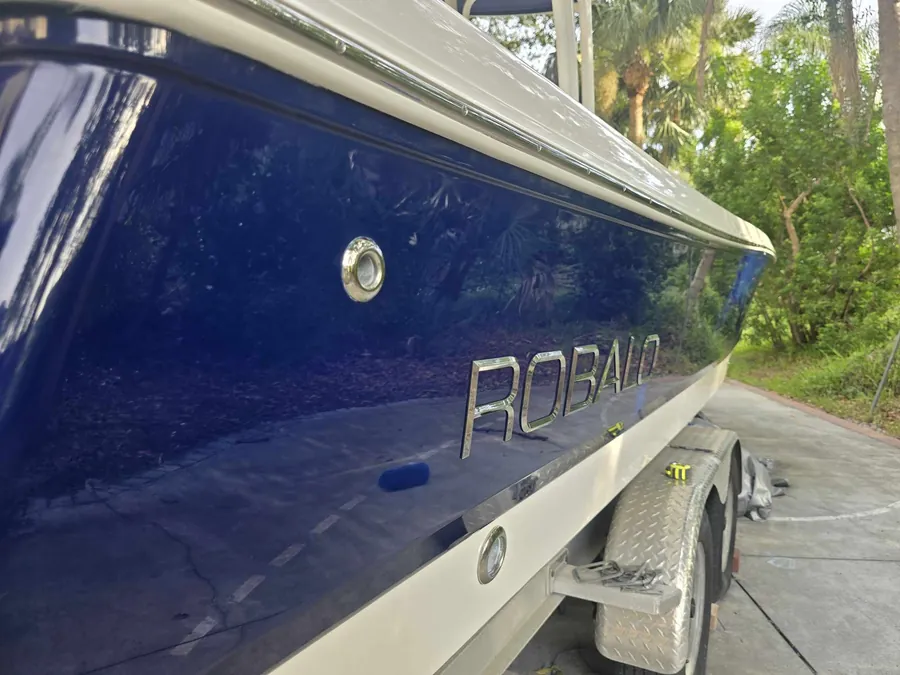
If you keep your boat in Indian Rocks Beach, you already know what the Gulf and the Intracoastal Waterway do to a hull over a season. Boat hull cleaning in Indian Rocks Beach is one of those maintenance tasks that sneaks up on you fast. The combination of intense Florida sun, warm saltwater, and the brackish mix that comes from tidal flow under the Park Boulevard Bridge creates conditions where waterline scum, slime, and oxidation build up faster than most boat owners expect. What looked like a clean hull in the spring can look green, chalky, and stained by midsummer. Sunrise Marine Detailing LLC works with Indian Rocks Beach boat owners to restore that waterline and hull surface back to clean, protected, and looking the way it should. Whether your boat lives on a lift, sits in a slip, or gets trailered to the Indian Rocks Beach Boat Ramp, we can get to you. Reach out today for a free quote and let us take a look at what your boat needs. For the full picture of how this fits with our recurring Captain's Wash maintenance program, or to see how we handle a nearby spot like Indian Rocks Beach, keep reading.
Why Indian Rocks Beach Boats Need Boat Hull Cleaning
Indian Rocks Beach sits right along the Gulf Intracoastal Waterway, and that location creates a unique set of challenges for any boat kept in the water here. The Intracoastal along this stretch mixes Gulf saltwater with runoff from the surrounding neighborhoods, drainage canals, and the tidal pools that push in and out through the gaps near the Tom Stuart Causeway. That mix of salinity levels, nutrients, and warm water temperatures is basically a perfect environment for marine growth. Barnacle larvae, algae, and biofilm all thrive in these conditions. If your boat sits in the water for more than a few weeks without movement, you are going to see a waterline ring forming. Leave it for a full season and that ring turns into a thick band of slime, calcium deposits, and in some cases early barnacle attachment, all of which are much harder to remove the longer they sit.
The sun is the other big factor here. Indian Rocks Beach averages well over 250 sunny days per year, and UV exposure at this latitude is intense. Gel coat on fiberglass hulls oxidizes under sustained UV exposure, meaning the surface loses its gloss and starts to look chalky, faded, or powdery to the touch. That oxidation also makes the surface more porous, which means marine growth and staining have an easier time bonding to the hull. Boats kept in covered slips or on lifts deal with this a little less than boats left floating in open sun, but even a boat on a lift gets enough ambient exposure to show oxidation after a Florida summer. Center console fishing boats, bay boats, and offshore sport fishers are all over this waterway, and the light-colored hulls that most of them carry show this discoloration very clearly. If your boat is a Mako, a Pursuit, a Contender, a Regulator, or any similar design with a white or off-white fiberglass hull, the waterline staining is going to be obvious after even a moderate stretch in the water.
Storage setup matters here too. A lot of Indian Rocks Beach boat owners keep their boats on private lifts behind their waterfront homes along the canals off the Intracoastal. These boats get pulled out of the water regularly, which helps, but the hull still collects salt residue, waterline scum, and tidal staining in between uses. Other owners keep boats at smaller community docks or at the public facilities near the Indian Rocks Beach Boat Ramp, where the boat may sit longer between outings. Trailered boats that get launched frequently have their own issues: repeated launching and retrieval without a proper hull rinse allows salt to dry and crystallize on the gel coat, which dulls the surface and can cause micro-etching over time. Regardless of how you store your boat, a dedicated hull cleaning on a regular schedule keeps all of these problems manageable and protects the long-term condition of your hull.
What's Included in Our Boat Hull Cleaning Service
- Waterline scum and slime removal: The waterline is where biological growth concentrates first, and it is often the dirtiest part of the hull on a boat that has been sitting in the water. We use a combination of dedicated marine waterline cleaners and careful mechanical agitation to break down the brown, green, and black slime that accumulates at the float line. This is not a simple wipe-down. Proper waterline cleaning requires the right product chemistry matched to the type of staining present, whether that is algae, biofilm, mineral deposits, or a combination of all three.
- Full hull wash and decontamination: After the waterline is treated, we wash the entire hull surface with a pH-balanced marine soap designed to pull salt, road grime (for trailered boats), fish blood, bait residue, and environmental fallout off the gel coat. We follow that with a targeted decontamination step using an iron-removing agent where needed, which pulls ferrous particles and rust staining out of the pores of the gel coat. Salt crystals and iron contamination both cause long-term damage if they are left on the surface, so this step is about more than just appearance.
- Marine growth and barnacle residue treatment: In the Indian Rocks Beach area, even boats on lifts can pick up early-stage barnacle attachment at the waterline if they sit in the water for extended periods. We treat these areas with appropriate acid-based marine growth removers that dissolve the calcium carbonate in barnacle bases and heavy calcified deposits without damaging properly cured gel coat or bottom paint. This step is followed by careful rinsing to neutralize any remaining chemistry before it can affect surrounding surfaces.
- Non-skid deck and hull side scrubbing: Textured non-skid surfaces on the deck and hull sides trap salt, algae, and grime in their recesses and are easy to overlook during a basic boat rinse. We scrub these surfaces with appropriate brushes and cleaners that get into the texture pattern and pull contaminants out, leaving the non-skid clean, bright, and functional. Neglected non-skid not only looks bad but can become slippery when the trapped organic matter gets wet, which is a real safety issue on a working boat.
- Salt residue rinse and fresh water flush: Every surface we treat gets a thorough fresh water rinse designed to flush out dissolved salts, cleaning agents, and loosened contaminants. Salt residue left on the hull and hardware accelerates corrosion on metal fittings, degrades sealants and bedding compounds, and causes the kind of long-term damage that is expensive to fix. A proper fresh water flush after cleaning is not optional. It is part of the job.
- Bottom paint inspection and touch-up coordination: Hull cleaning above the waterline gives us a good look at the condition of your bottom paint at the waterline edge. If we see areas where the paint is thin, chipping, or compromised, we will point that out and can coordinate a bottom paint touch-up as an add-on service. Staying ahead of bottom paint failures is much cheaper than dealing with the consequences of unprotected hull sections in a warm, growth-heavy environment like the Gulf Intracoastal.
- Post-clean inspection and client walkthrough: When the cleaning is complete, we do a walkthrough with the boat owner or leave a written summary if you are not on-site. We will flag anything we noticed during the job, whether it is gel coat cracking, hardware corrosion starting, teak that needs attention, or areas of significant oxidation that may need a polish or compound treatment at a future appointment. Our job is not just to clean your boat but to give you better information about its condition.
While we are at it, ask about our oxidation removal, a lot of Indian Rocks Beach customers pair this with their detail to extend the results.
Our Process for Indian Rocks Beach Boats
Step 1: Initial Assessment and Free Quote
Every job starts with a conversation. When you reach out to Sunrise Marine Detailing, we ask you about your boat: the size, the hull material, how long it has been in the water, where it is kept, and what kind of staining or growth you are dealing with. For boats in the Indian Rocks Beach area, we also ask about your storage situation, since a boat on a private lift behind a canal home has different access requirements than a boat sitting in a slip at a public facility or regularly trailered to the Indian Rocks Beach Boat Ramp. Based on that information, we give you a free quote and a realistic timeline for the job. We do not believe in surprise charges or upsells you did not ask for. What we quote is what you pay unless something unexpected comes up, in which case we call you before proceeding.
Step 2: On-Site Preparation
When we arrive at your boat, we do a hands-on assessment before we start any work. We inspect the hull surface visually and by touch, checking for areas of heavy oxidation, barnacle attachment, waterline staining severity, and any gel coat damage that might affect how we approach the cleaning. We also check the condition of any bottom paint at and below the waterline edge, note the location of through-hulls and transducers, and make sure we understand exactly where the boat sits and how we can access the hull from all sides. If you have a boat on a lift, we coordinate with you on lift position to maximize our hull access. Preparation makes the actual cleaning faster, safer, and more thorough.
Step 3: Cleaning and Treatment
This is where the work happens. We work methodically from the waterline outward, applying the appropriate cleaning agents for each type of contamination we identified in the assessment. Biological growth gets a targeted treatment first so it can dwell and break down while we work on surrounding areas. We use soft wash brushes, microfiber mitts, and detailing pads matched to the surface we are working on, because abrasive tools on gel coat cause swirl marks and micro-scratches that create problems later. Every product we use is marina-appropriate and we take precautions to contain runoff and minimize any environmental impact. The cleaning step is thorough and unhurried, because rushing leaves streaks, missed spots, and chemistry residue that causes problems after we leave.
Step 4: Final Rinse, Quality Check, and Handoff
After the cleaning treatment is complete, we do a full fresh water rinse of every surface we touched, followed by a quality check pass where we look at the hull in multiple lighting conditions and angles to catch any missed spots, streaks, or areas that need a second treatment. If something does not look right, we go back and fix it before we consider the job done. Once we are satisfied with the result, we do the client walkthrough described above, answer any questions you have about what we found or what you should watch for, and leave the boat clean, rinsed, and ready for your next time on the water. We treat every boat in Indian Rocks Beach the same way we would want our own boat treated.
Boats and Marinas We Service Around Indian Rocks Beach
Indian Rocks Beach sits in the middle of one of the most active recreational boating corridors in Pinellas County. The waterways here are busy year-round, and the variety of boats and storage situations we encounter reflects that. We service boats docked, moored, or stored throughout the Indian Rocks Beach community and the surrounding areas along the Intracoastal Waterway. Whether your boat is a 17-foot bay boat on a backyard lift or a 40-foot sportfisher in a full-service slip, we can work with it.
- Indian Rocks Beach Boat Ramp: Trailered boats that get launched here regularly are some of our most common clients. Repeated saltwater exposure without a dedicated hull cleaning between launches leads to visible staining and oxidation that worsens with each trip. We service trailered boats both at the ramp area and at your home.
- Private canal docks and lifts along the Intracoastal: Many Indian Rocks Beach homeowners keep their boats on private lifts behind their waterfront properties. These boats get regular use but still accumulate waterline staining and salt buildup between cleaning sessions. We come to your dock and work around your lift setup.
- Park Boulevard Bridge area: The tidal flow around the Park Boulevard Bridge creates a mixing zone where salinity and nutrient levels fluctuate significantly. Boats stored near this area tend to see accelerated biological growth at the waterline due to the nutrient-rich water that pushes through with the tides.
- Tom Stuart Causeway waterway access points: The areas accessed via the Tom Stuart Causeway include several private docks and community boat storage facilities. The water here carries significant tidal movement and Gulf influence, which makes it a high-growth environment for the kind of marine organisms that attach to hull surfaces.
- Walsingham Park area waterways: The waterways near Walsingham Park are used by smaller recreational boats, kayaks, and fishing skiffs. We service smaller vessels kept in this area as well as the larger boats that pass through from the connected Intracoastal channels.
- Offshore center consoles and sport fishers: A significant portion of Indian Rocks Beach boaters run offshore fishing boats ranging from 24-foot center consoles to 38-foot and larger convertible sportfishers. These boats deal with Gulf saltwater conditions that are harder on gel coat and waterline surfaces than protected Intracoastal storage. We are experienced with the specific cleaning needs of boats that run offshore regularly.
Ready for a showroom shine?
Free quote, mobile to your dock across Tampa Bay. Same-week booking.
How Long Boat Hull Cleaning Takes in Indian Rocks Beach
One of the first questions most boat owners ask is how long the job will take, especially if they need the boat back in the water by a certain time. The honest answer is that it depends on the size of the boat and the severity of the contamination we find, but we can give you reliable ranges based on our experience with boats in this area.
For boats under 25 feet, including bay boats, flats boats, smaller center consoles, deck boats, and pontoons in the smaller size range, a standard hull cleaning typically runs between one and a half to three hours. This assumes a moderate level of waterline staining and general salt buildup. If the boat has not been cleaned in a long time and has significant biological growth or heavy calcium deposits, plan for the upper end of that range or a little beyond. The good news is that almost every boat in this size category qualifies for same-day completion, meaning you book it in the morning and the boat is back in service by afternoon.
Boats in the 25- to 35-foot range, which covers a wide swath of what we see in Indian Rocks Beach including larger center consoles, walkaround cuddy cabins, express cruisers, and mid-size sportfishers, generally run between three and five hours for a thorough hull cleaning. The additional hull surface area means more product, more agitation time, and a longer rinse process. Heavily fouled boats in this size range could push toward six hours if we find significant growth or deep oxidation that requires compound work in addition to the cleaning. Same-day completion is still the standard outcome for most boats in this category.
For boats 35 feet and over, including larger sportfishers, cruisers, trawlers, and any commercial-use vessels kept in the Indian Rocks Beach area, hull cleaning is typically a full-day job. These boats have more hull surface, more hardware, more non-skid area, and often more accumulated staining due to their longer time in the water between haul-outs. We schedule these jobs with a full day blocked and communicate clearly with the boat owner about what the scope of work will involve. Multi-day jobs are possible for particularly large or neglected vessels and we discuss that upfront during the quote process so there are no surprises.
Weather matters too. Indian Rocks Beach gets afternoon thunderstorms on a regular basis during the summer months. We monitor conditions and schedule jobs to avoid working in lightning or heavy rain, which can affect cleaning quality and crew safety. We will communicate proactively if we need to adjust a scheduled job time due to weather.
Before and After: What to Expect
If you have never had a professional hull cleaning done on your boat before, it can be genuinely surprising how significant the visual change is. The most dramatic transformation almost always happens at the waterline. Before cleaning, this band of the hull typically shows a combination of dark brown or black biological staining from slime and algae, orange or rust-colored mineral deposits from iron in the water, and a white or grey calcium crust from hard water mineral buildup. On a white fiberglass hull, all of this sits in stark contrast and makes even a well-maintained boat look neglected. After cleaning, that waterline stripe disappears and you can see the original hull color and gel coat again. On a boat with a painted waterline stripe or graphics in that zone, the colors come back noticeably cleaner and truer.
Above the waterline, the transformation on oxidized gel coat is one of the most satisfying parts of the job. Florida sun is brutal on fiberglass, and by the end of a summer season many boats in the Indian Rocks Beach area show significant chalking on their hulls. Chalking means the surface of the gel coat has broken down from UV exposure and turned powdery, matte, and dull. After a thorough hull wash and decontamination, the chalky film is removed and the underlying gel coat is revealed. Depending on how far the oxidation has progressed, this step alone can bring back a meaningful amount of gloss. For severely oxidized gel coat, a follow-up compounding and polishing service will take the restoration further, but even the cleaning step alone makes a visible difference. Non-skid surfaces on the deck and hull sides also brighten noticeably once the salt and biological residue is cleared out of the texture, and the functional grip of the surface improves as well.
It is important to set realistic expectations here. Boat hull cleaning is not the same as a full polish or paint correction. Deep scratches, gel coat crazing, faded paint, and structural damage are not fixed by a cleaning service. What you get is a hull that is clean, decontaminated, and in its best natural condition for its age and current state. In many cases, a thorough cleaning reveals areas that could benefit from follow-up services like compounding, bottom paint touch-up, or teak restoration, and we will always tell you what we see rather than overselling you on work you do not actually need. The goal is a hull that you can be proud to pull up to the sandbar with, and that is in the best condition to resist future growth and staining for as long as possible before the next cleaning cycle.
What Indian Rocks Beach Boat Owners Ask
How do I schedule a boat hull cleaning with Sunrise Marine Detailing?
Scheduling is straightforward. You can call or text us directly, or fill out the contact form on this page. We will respond quickly and ask you a few questions about your boat and where it is kept in the Indian Rocks Beach area. From there we give you a free quote and work out a time that fits your schedule. We service boats throughout the week and try to be flexible around your boating plans, since we understand that your schedule is often driven by weather windows and tide conditions. Once a job is confirmed, we show up on time and ready to work.
What types and sizes of boats do you work on?
We work on a wide range of recreational boats that are common throughout the Indian Rocks Beach and Pinellas County area. This includes fiberglass center consoles, bay boats, flats boats, deck boats, pontoon boats, walkaround cabin boats, express cruisers, offshore sportfishers, and trawlers. We also service aluminum hull boats with appropriate chemistry adjustments, since aluminum requires different cleaning products than fiberglass. If you have an unusual hull material or a particularly large or complex vessel, just let us know during the initial call and we will discuss whether and how we can accommodate it.
How often should I get boat hull cleaning in Indian Rocks Beach?
For boats kept in the water full-time or for extended stretches, we generally recommend hull cleaning at least every three to four months during the warm season in Indian Rocks Beach. The warm water temperatures and nutrient-rich Intracoastal environment here accelerate biological growth significantly compared to northern boating areas, so a cleaning schedule that might work fine in a cooler climate will leave you with heavy fouling here. Boats that get used and trailered regularly can often stretch to every four to six months, but the more time your hull spends in the water without movement, the more frequently you will need cleaning to stay ahead of serious buildup.
How does the pricing work and how do I get a quote?
We provide free quotes after a quick conversation about your boat, its condition, and your timeline. We do not publish set prices because the variables that affect the scope and time of a hull cleaning job are significant enough that a published price list would either overcharge smaller, cleaner boats or undercharge larger, heavily fouled ones. What we can tell you is that our quotes are honest and based on what the job actually requires. There are no add-on charges that were not discussed up front. Reach out and describe your boat to us and we will give you a clear, straightforward number that reflects the actual scope of work.
Do you work at private docks, or does the boat need to go somewhere?
We come to your boat. That is a core part of how we operate. We service boats at private docks and lifts throughout the Indian Rocks Beach waterfront, including the canal neighborhoods off the Intracoastal and properties near the Tom Stuart Causeway and Park Boulevard Bridge. We also work at community dock facilities and can meet you at the Indian Rocks Beach Boat Ramp area if that is the most convenient access point for your trailered boat. Our mobile setup means we bring everything we need to your location, so there is no need to move the boat unless you want to.
Service Areas Nearby
While we focus heavily on Indian Rocks Beach and its immediate waterways, Sunrise Marine Detailing LLC serves the broader Pinellas County boating community throughout the Tampa Bay and Gulf Intracoastal corridor. We also detail boats kept in Indian Shores, the small barrier island community just south of Indian Rocks Beach along the Intracoastal. Heading north along the waterway, we regularly service boats in Belleair Beach and Clearwater, including the marina areas near Clearwater Harbor and the Intracoastal channels that connect them. To the south, we cover the Madeira Beach and Treasure Island areas, both of which have active fishing and recreational boating communities with similar maintenance needs to those we see in Indian Rocks Beach. Inland along the Tampa Bay waterway, we serve boats kept in Largo, Seminole, and the communities around Boca Ciega Bay. If you are not sure whether your location falls within our service range, just ask us when you call or text. We are willing to travel for the right job and we are always happy to discuss logistics for boats kept further afield in the greater Tampa Bay area. Our goal is to build long-term relationships with boat owners throughout this region, not just to do a single job and move on. Whatever waterway your boat calls home, give us a call and let us talk about how we can help keep it looking its best.
We also serve nearby areas, see Palm Harbor or Yacht Clubs Tampa Bay for the same boat hull cleaning work.
Get a Free Quote
Ready to get your hull cleaned and looking the way it should? Sunrise Marine Detailing LLC is here to help. Whether your boat is docked along the Indian Rocks Beach Intracoastal, sitting on a lift off one of the canal streets, or getting trailered regularly to the Indian Rocks Beach Boat Ramp, we can put together a free quote that fits your boat and your schedule. Call us, send a text, or fill out the contact form below and we will get back to you promptly. Tell us about your boat and where it is kept, and we will take care of the rest. We look forward to earning your trust on the water. Call (727) 297-8866 schedule a free quote, or see what other Indian Rocks Beach owners say.