 Sunrise Marine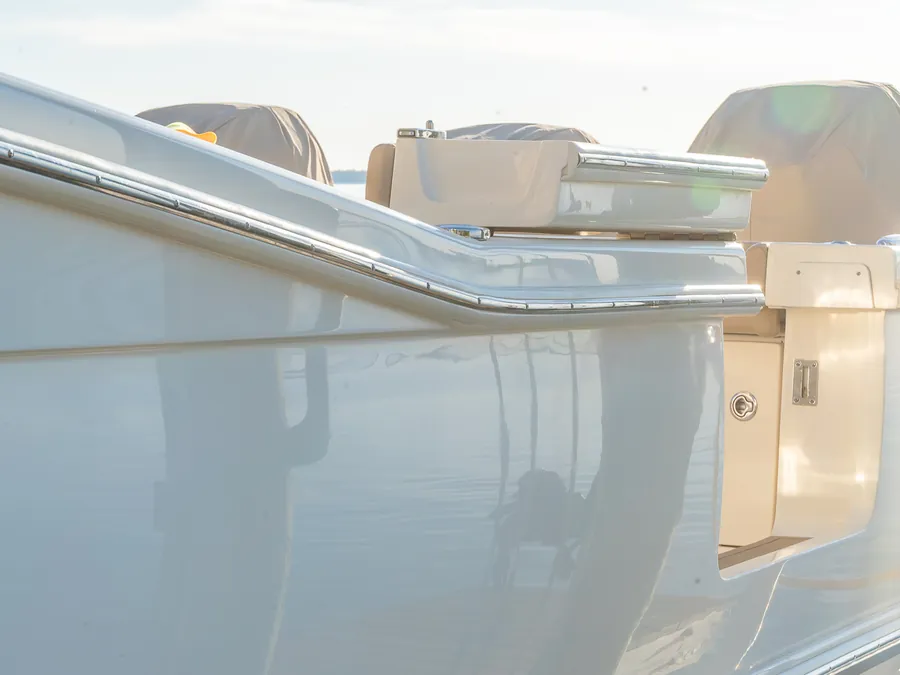
If you're searching for boat ceramic coating in Tierra Verde, you already know what the water here does to a boat. The combination of saltwater exposure off the Fort De Soto Channel, relentless UV from the Florida sun, and the brackish tidal flow around Pinellas Bayway creates one of the most punishing environments for gel coat on the Gulf Coast. Boats kept at Tierra Verde Marina or tied to a private lift along Pine Key see oxidation set in faster than almost anywhere else in Pinellas County. Marine-grade ceramic coating bonds directly to your gel coat, seals out salt, and shields the surface from UV degradation for up to two years. If your hull is looking chalky, faded, or just not the same color it was when you bought it, this page will walk you through exactly what we do, how long it takes, and what to expect when we're done. Ready to protect your investment? Reach out to Sunrise Marine Detailing LLC today for a free, no-pressure quote. For the full picture of how this fits with our marine ceramic coating, or to see how we handle a nearby spot like Tierra Verde, keep reading.
Why Tierra Verde Boats Need Boat Ceramic Coating
Tierra Verde sits on a barrier island at the southern tip of Pinellas County, bordered by Tampa Bay on one side and the Gulf of Mexico on the other. That geography is spectacular for fishing and cruising, but it creates a uniquely aggressive environment for fiberglass and gel coat. The salinity levels around Fort De Soto Channel run higher than in many of the more sheltered coves up the bay, and the tidal exchange through the Pinellas Bayway carries a constant load of suspended salt, biological material, and fine sediment. Every time your boat sits in that water or even just gets splashed by passing wakes, it is absorbing contaminants that slowly work their way into the pores of your gel coat. Without a protective barrier in place, those contaminants begin breaking down the resin binders in the gel coat, and oxidation starts pulling the color right out of the surface. A boat that was a deep, glassy white or gleaming navy blue when it left the dealer lot can look flat and chalky after a single Florida summer if it's not protected correctly.
The boats most commonly kept around Tierra Verde tend to run on the larger side compared to other Pinellas neighborhoods. Center consoles in the 24-to-32-foot range are extremely common, particularly among the serious offshore and nearshore fishing crowd who run out through the Fort De Soto Channel to the Gulf flats and nearshore reefs. Dual-console family boats in the 22-to-28-foot category are also everywhere, and you'll see plenty of sport cruisers and express cabin boats in the 30-to-40-foot range docked at Tierra Verde Marina. Larger boats have more surface area, which means more gel coat exposed to the elements, and they often spend more time sitting in the water on lifts or in slips rather than being trailered home after each use. That constant water contact accelerates the oxidation process significantly, because saltwater is not just washing over the hull during a run, it's sitting against the hull every day between trips. Ceramic coating creates a hydrophobic layer that causes water to bead off the surface rather than sitting and soaking in, and that makes a meaningful difference over the life of a marine finish.
Storage setup matters a lot in this neighborhood. Some boat owners at Tierra Verde Marina are in covered slips, which cuts UV exposure considerably. But a huge number of boats in this area sit on open lifts, exposed to full Florida sun for eight to twelve hours a day during the summer months. UV radiation is one of the two biggest enemies of marine gel coat, the other being salt. When the sun hits an unprotected gel coat surface on a hot July afternoon, it is actively breaking down the molecular structure of the resin. Over one season, that shows up as a mild chalking. Over two or three seasons without protection, you can end up with gel coat that needs aggressive compound cutting just to get the color back, and in some cases, you've gone past the point where a polish can restore it fully. Boat ceramic coating addresses this by applying a UV-inhibiting layer over the gel coat that absorbs and deflects solar energy before it reaches the surface. For boats kept on open lifts around Bayway Isles or Pine Key, that UV protection is arguably even more valuable than the hydrophobic salt-repelling properties. Combining both protections in one treatment is what makes ceramic coating the most cost-effective long-term strategy for maintaining a boat's finish in this environment.
What's Included in Our Boat Ceramic Coating Service
- Full hull wash and salt decontamination: We start with a two-step wash that combines an iron-removing pre-soak with a pH-balanced marine soap. The iron remover pulls oxidized metal particles, rust streaks, and embedded salt crystals out of the gel coat pores before we ever touch the surface with a pad. This step is not optional, and it's not something you can skip by just hosing the boat off at the dock. Salt that's been baking into a gel coat surface for weeks or months won't come off with fresh water alone. Getting the surface chemically clean before any polishing or coating work begins is what separates a professional result from a result that fails within a few months.
- Clay bar treatment and surface prep: After the wash, we run a marine-grade clay bar across the entire hull and topsides. Clay barring pulls bonded contaminants that survived the wash, including industrial fallout, fuel residue, biological staining from algae and barnacle attachment, and fine silicate particles that embed in gel coat from sitting near active channels. In an area like Tierra Verde where there's constant boat traffic through the Pinellas Bayway and significant wake wash, this kind of surface contamination builds up faster than most boat owners realize. A clay-smooth surface is essential for the ceramic coating to form a proper chemical bond. Skipping this step results in coating adhesion failures that show up as streaks or early delamination.
- Machine polish and oxidation correction: Depending on the current condition of your gel coat, we perform one or more stages of machine polishing to remove oxidation, light scratching, and surface hazing. We use dual-action and rotary polishers paired with marine-specific compounds and finishing polishes calibrated for gel coat hardness. Gel coat is not the same as automotive paint, and using automotive polishing protocols on a fiberglass hull can create uneven cutting or induce micro-marring that shows up under direct sunlight. Our polishing work is done by hand-application where needed on detailed areas like the bow flare, the transom corners, and around hardware. This step is what restores the optical clarity that makes ceramic coating look its absolute best when it's applied.
- Marine-grade ceramic coating application: We apply a professional-grade marine ceramic coating that is specifically formulated for gel coat and fiberglass rather than adapted from an automotive product. Marine ceramic coatings are engineered to handle the thermal expansion and contraction cycles that fiberglass experiences on the water, the constant UV loading of Florida sun, and the chemical aggression of saltwater. The coating is applied in thin, overlapping passes with applicator blocks and then leveled with clean microfiber before the initial cure begins. This process requires careful attention to ambient temperature and humidity, both of which affect cure timing, and it's a primary reason why professional application produces better results than a weekend DIY attempt.
- Non-skid surface treatment: Non-skid decking is one of the most neglected surfaces on any boat, partly because it's hard to clean and partly because people assume it doesn't need the same protection as a glossy hull. But non-skid is just as vulnerable to salt embedding and UV graying as the hull below the waterline. We treat non-skid surfaces with a compatible ceramic or SiO2-infused sealant product designed to penetrate the textured surface and provide protection without filling the grip pattern. Clean, protected non-skid also resists the black mold growth that Florida humidity encourages in shaded cockpit areas, which means your boat stays cleaner between uses.
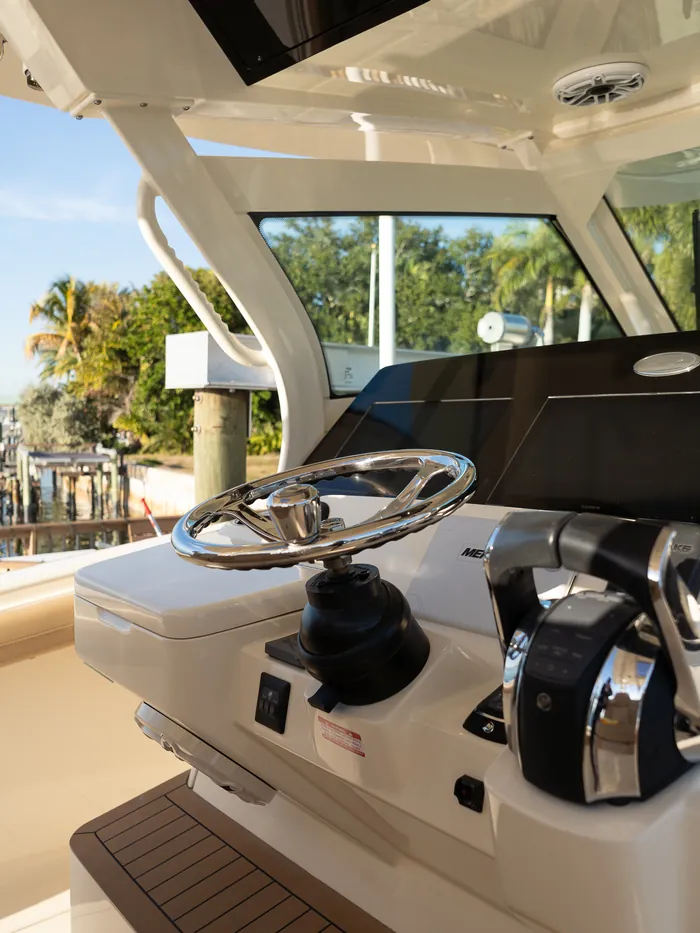
- Brightwork and trim protection: Stainless steel rails, aluminum trim, and any teak or composite wood accents on your boat get attention as part of a complete service. Stainless on a saltwater boat develops a surface rust called tea staining that's actually a contamination issue more than a corrosion issue, and it wipes away and is then sealed to slow the return. Aluminum trim gets a protective application to resist the white oxidation bloom that dulls it out over a season. Teak and synthetic teak are cleaned and treated as appropriate for the material. These details are part of what makes a fully coated boat look complete rather than just shiny on the hull with neglected everything else.
- Final inspection and detail wipe-down: Before we hand the boat back, every panel gets a final inspection pass in direct sunlight to check for any high spots, streaks, or areas where the coating needs an additional level pass. We also do a complete wipe-down of cockpit surfaces, grab handles, and dock-side exterior panels to make sure the boat looks clean and finished, not just technically coated. You'll be able to see the difference immediately, and we'll walk you through what we did and what to expect over the next week as the coating continues its ambient cure cycle.
While we are at it, ask about our oxidation removal before coating, a lot of Tierra Verde customers pair this with their detail to extend the results.
Our Process for Tierra Verde Boats
Step 1: Boat Assessment and Free Quote
Every job starts with a conversation, not a form. We want to know your boat: the make, the length, the approximate age, how it's stored, and what you're seeing on the gel coat right now. Is it chalky and flat? Does it have water spots that won't come off with a wash? Is there heavy oxidation at the waterline, or is the topside in better shape than the hull sides? All of that information tells us what prep work your specific boat needs before we apply any coating. A lightly oxidized 24-foot center console that's been well maintained and lives in a covered slip needs a very different prep approach than a 38-foot sport cruiser that's been sitting on an open lift for two years with minimal maintenance. We provide free quotes after this initial conversation, and we're happy to do a quick visual assessment at your slip or on your trailer if you want an in-person look before committing. We serve Tierra Verde Marina and the surrounding private docks throughout the Tierra Verde area, so getting to you for an assessment is never a problem.
Step 2: Surface Preparation
Preparation is the majority of the work in any ceramic coating job, and it's the part that most separates a result that lasts 18 to 24 months from a result that degrades in six months. Once we've agreed on a scope and scheduled the appointment, we arrive with a full setup: pressure washer, chemical decon supplies, clay bar kit, and a full polishing station. The prep phase for most boats in the Tierra Verde area includes the two-step chemical wash, full clay bar treatment, and at minimum one polishing stage. Boats with heavier oxidation or surface etching from salt and biological contact may need a two-stage or three-stage polish before the gel coat is optically clear enough to coat. We don't skip or abbreviate this phase because doing so directly undermines the performance of the ceramic layer. Think of it this way: the coating is only as good as the surface underneath it, and if that surface still has oxidation or contamination in it, you've sealed the damage in rather than sealed it out.
Step 3: Ceramic Coating Application
Application is done in a systematic pattern, usually working from the top of the boat downward and from bow to stern in overlapping sections. This ensures no area is missed and that the coating has consistent thickness across the entire surface. We apply ceramic coating in thin layers because thin layers bond correctly. Thick, pooled application creates uneven curing and can result in a streaked or high-spot appearance that has to be buffed off and reapplied. Each section is applied, given a short flash time that depends on the ambient temperature and humidity at the time of application, and then leveled with a clean, folded microfiber cloth. In the Florida summer heat, flash times can be quite short, which demands attentive application technique. During cooler months or overcast conditions, flash times extend, and the process slows down slightly. We monitor conditions throughout the application and adjust our technique accordingly to make sure the coating cures correctly across the whole boat.
Step 4: Final Quality Check and Owner Walkthrough
Once coating application is complete and the initial leveling is done, we let the coating set and then do a full inspection pass under direct light. Any area that shows a high spot, a missed section, or uneven leveling gets addressed immediately during this phase rather than after the coating has advanced in its cure. We then do a final exterior wipe-down and clean up our work area completely. The last thing we do before we leave is walk you through what we applied, how to care for the coating during the initial cure period (typically the first 24 to 48 hours), and what maintenance habits will get you the most life out of the coating going forward. We're not in a rush during this walkthrough because we want you to know exactly what you have and how to keep it looking great. A ceramic-coated boat is easier to maintain than an uncoated one, but there are a few simple care practices that make a real difference in longevity, and we'll cover those with you in plain terms before we leave the dock.
Boats and Marinas We Service Around Tierra Verde
Tierra Verde is a relatively compact community, but the boating infrastructure here punches well above its size. We service boats kept at all the major facilities in and around the neighborhood, and we're equally comfortable working at private residential docks throughout the area. Here's a breakdown of the specific locations and boat types we handle regularly:
- Tierra Verde Marina: One of the primary full-service marinas in the area, with wet slips, a dry stack, and a boat ramp. We work with boats in all storage configurations here, from dry stack center consoles in the 18-to-26-foot range to larger wet-slip cruisers and sport boats. If your boat lives at Tierra Verde Marina and you've noticed the gel coat dulling from constant sun exposure, ceramic coating is the most effective long-term solution available.
- Pinellas Bayway corridor: The channel and waterfront properties along Pinellas Bayway see heavy boat traffic and significant salt spray, particularly from the wakes of larger vessels moving through the cut. Boats kept on private lifts along this corridor are exposed to both the spray and the UV, and many of the homeowners we work with here have seen how fast an unprotected hull degrades through a single summer.
- Fort De Soto Channel access boats: The boats that run through the Fort De Soto Channel regularly are often fishing boats in the 20-to-35-foot range: center consoles rigged for nearshore and offshore fishing, bay boats built for the flats on the Gulf side, and the occasional sport cruiser heading out for an anchoring day. These boats see some of the highest salt exposure in the county because they're running in open Gulf water and tidal passes, not protected bay water.
- Bayway Isles and private docks: The residential waterways around Bayway Isles include numerous private docks and lifts where boats spend extended periods between uses. We make mobile calls to these private docks and bring all our equipment to you. You don't need to move the boat to a marina or detail shop. We come to where the boat lives.
- Pine Key area: The Pine Key waterfront and the surrounding tidal creeks and channels host a mix of smaller fishing skiffs, bay boats, and pontoon boats alongside larger vessels. We handle all of these, and we're used to working in tighter residential dock spaces where maneuvering room is limited.
- Trailered boats in Tierra Verde: Not every boat in Tierra Verde lives in the water. Plenty of owners trailer their center consoles and bay boats home between trips and store them in driveways or in residential garages. We do mobile ceramic coating for trailered boats as well, working right on the trailer in your driveway if needed, which makes scheduling simple and eliminates the cost of hauling to a facility.
Regardless of where your boat lives around Tierra Verde, we can work with your storage setup and schedule. We're a mobile service first, which means the convenience factor is built into every job we do.
Ready for a showroom shine?
Free quote, mobile to your dock across Tampa Bay. Same-week booking.
How Long Boat Ceramic Coating Takes in Tierra Verde
One of the most common questions we get is how long the whole process takes, which is a fair question if you're trying to plan around your fishing schedule or a weekend you want to take the boat out. The honest answer is that it depends on the size of the boat and the condition of the gel coat going in. Here's a realistic breakdown:
For boats under 25 feet, including bay boats, smaller center consoles, deck boats, and entry-level bowriders, a complete ceramic coating service including wash, decontamination, polishing, and coating application typically runs between four and seven hours. A boat in good condition that's been maintained reasonably well sits at the lower end of that range. A boat with heavy oxidation or significant water spotting that needs a more aggressive polish before coating sits at the higher end. Most of these jobs are completed in a single day, and many can be done while you're at work, so the boat is ready when you get home.
For boats in the 25-to-35-foot range, which covers the majority of the center consoles, dual consoles, and smaller express cruisers common to the Tierra Verde area, the typical service window is seven to ten hours, sometimes spread across a day and a half depending on how much prep work is needed. A 28-foot center console with moderate oxidation and a full cockpit area to treat is a full day of work done correctly. Rushing through a boat this size to hit an aggressive time target results in polishing shortcuts and coating inconsistencies that show up within months.
For boats 35 feet and over, which includes the larger sport cruisers, cabin boats, and offshore fishing boats you see at Tierra Verde Marina, plan for one to two full days of work. The increased surface area is not the only factor. Larger boats often have more complex geometry, more brightwork and trim to address, more non-skid surface area in the cockpit and bridge, and frequently have more accumulated oxidation because they're often older or were used more heavily before the owner committed to a ceramic coating program. We'll give you a specific time estimate when we assess your boat so there are no surprises on scheduling.
The good news for most Tierra Verde boat owners is that the majority of the boats in this neighborhood fall in the small-to-medium category, and those jobs are typically completed same-day. You can drop your car off in the morning, go to work or spend the day on land, and come back to a freshly coated boat. We'll coordinate arrival and departure times around your schedule to make it as low-friction as possible.
Before and After: What to Expect
If your boat has been sitting in the Florida sun and saltwater for more than one season without a professional coating, the before-and-after contrast from a ceramic coating service can be dramatic. Most boat owners in Tierra Verde who come to us have a gel coat that's described in one of a few ways: chalky and flat on the topsides, heavily water-spotted around the waterline, or just generally dull and tired-looking even after a good wash. All of those conditions are the result of the same underlying problem, which is that the gel coat's top layer has oxidized, and the surface texture has opened up enough to hold contaminants that a simple rinse can't lift. Before we apply any coating, the polishing phase is what addresses this. A machine polish on a properly washed and clay-barred surface cuts through the oxidized top layer and exposes the fresh gel coat underneath, and for most fiberglass hulls that haven't gone past the point of no return, the color that comes back is noticeably richer and deeper than what was visible before. White hulls go from a flat gray-tinged white back to a bright, optically clean white. Colored hulls, like the navy blues and deep reds you see on offshore fishing boats, come back with a wet-looking depth that's hard to describe until you see it.
After the coating goes on, the visual character of the surface changes again. Ceramic coating adds a layer of gloss on top of the polished gel coat that gives the surface a slightly liquid appearance, similar to a freshly waxed car but more durable and more dimensionally deep. Light reflects off a coated surface differently than it does off a waxed surface, with less of the diffuse scattered reflection that gives wax its slightly milky appearance and more of the direct, mirror-type reflection that makes a properly coated hull look almost like a painted car. Water behavior on the surface is the other thing owners notice immediately. A coated hull causes water to bead and run off with very little residual sheeting, and when you rinse the boat down after a trip, the salt washes away much more completely than it would on an uncoated surface. That visual feedback of water beading strongly is also a useful maintenance indicator: when the beading starts to weaken after 18 months or so, that's your cue that the coating is approaching the end of its protective life and it's time to think about refreshing it.
Non-skid decking is another area where the difference is visible and practical. Sun-grayed non-skid on a fiberglass cockpit floor looks weathered and aged even when the hull is in decent condition. Cleaning and treating the non-skid restores the color contrast between the textured grip surface and the surrounding gelcoat, making the whole boat look more cohesive and better maintained. Saltwater boats in this area also tend to accumulate biological staining on non-skid surfaces from the combination of warm water splash and partial shade in the cockpit, and that dark graying from mold and algae growth lifts during the prep cleaning, revealing the original color underneath. Brightwork and stainless also gets addressed as part of a complete service, and the transformation of a tea-stained or lightly rusted stainless rail back to a clean, bright finish is one of the details that makes the whole boat look significantly newer and better-cared-for when you stand back and look at it from the dock.
What Tierra Verde Boat Owners Ask
How do I schedule a boat ceramic coating service in Tierra Verde?
Scheduling is straightforward. You can reach us by phone, text, or through the contact form on this page. We'll ask you a few basic questions about your boat: the length, the type, how it's stored, and what condition the gel coat is in right now. Based on that, we can give you a time estimate for the job and a free quote. We work around your schedule as much as possible, and because we're a mobile service, we come to wherever your boat is kept, whether that's a slip at Tierra Verde Marina, a private dock along Pine Key, or your driveway on a trailer. Most people find that texting us a few photos of the boat makes the initial conversation faster and the quote more accurate, since we can see the condition of the gel coat before we show up.
Does boat ceramic coating work on all types and sizes of boats?
Marine ceramic coating is compatible with fiberglass and gel coat surfaces, which covers the vast majority of powerboats, sailboats, and pontoons in the Tierra Verde area. Center consoles, dual consoles, cuddy cabins, express cruisers, bay boats, deck boats, and sport fishing boats in the 16-to-50-foot range are all boats we work on regularly. Aluminum hull boats can also be coated, though the prep chemistry is slightly different since aluminum requires different decontamination protocols than fiberglass. Painted hulls, including boats with aftermarket topside paint or antifouling paint on the bottom, are handled on a case-by-case basis depending on the paint type and condition. If you're not sure whether your boat is a good candidate, just reach out and describe it to us. We'll give you an honest answer about whether ceramic coating is the right fit for your specific vessel.
How often should I get boat ceramic coating in Tierra Verde?
The honest answer for most boats kept in this area is every 18 to 24 months. The product we apply is rated for that range under normal conditions, but "normal conditions" in Tierra Verde means constant saltwater exposure, high UV loading from full Florida sun, and frequent use through high-salt channels like the Fort De Soto Channel. Boats stored in covered slips and used less frequently can push toward the 24-month end of that range. Boats on open lifts that go out multiple times per week in full sun will see the coating's protective properties degrade closer to the 18-month mark. The easiest way to track where you are is to watch the water behavior on the hull. When you rinse the boat and the water no longer beads aggressively, the ceramic layer is thinning, and it's time to think about the next service. Getting boat ceramic coating in Tierra Verde on a regular cycle is significantly more cost-effective than letting the gel coat oxidize to the point where it needs heavy correction work before it can be coated again.
How does pricing work, and do you provide free quotes?
We provide free quotes after a quick conversation about your boat and timeline. We don't post set prices online because the cost of a proper ceramic coating service depends on several factors that are specific to your boat: the size, the current condition of the gel coat, the amount of prep work needed, and what surfaces beyond the hull you want included in the service. A boat with minor oxidation in good overall condition is a different job than a boat that needs significant compound cutting before it's ready to coat, and charging both the same flat rate wouldn't be fair to either owner. We want to give you an accurate number based on your actual boat, not a generic price that gets adjusted later. Reach out with a description or a few photos and we'll get back to you with a clear, straightforward quote.
Do you work at private docks, or do I need to bring my boat somewhere?
We are a fully mobile service, which means we come to where your boat is. We work at private residential docks throughout the Tierra Verde area, including properties along Pine Key, the Bayway Isles canal system, and the residential waterfront neighborhoods accessible off Pinellas Bayway. You do not need to trailer the boat to a shop or move it to a marina for us to work on it. We bring all of our own equipment and supplies and connect to the water and power at your dock, so your location just needs reasonable access to the water, the dock, and the boat. If your boat is on a lift, we typically work with it in the lowered position for the best access to the hull sides. If you have questions about whether your specific dock setup would work for our service, just describe it to us when you call or text and we'll let you know exactly what to expect.
Service Areas Nearby
While we specialize in boat ceramic coating for Tierra Verde and the surrounding waterways, we regularly service boats throughout the broader Pinellas County and Tampa Bay area. Boat owners in St. Pete Beach and Pass-a-Grille are some of our most frequent customers, given how close those communities sit to the same high-salinity Gulf-adjacent water that Tierra Verde boats deal with. We also service a significant number of boats kept in Gulfport and along the Boca Ciega Bay waterfront, where the mix of bay and channel water creates similar oxidation challenges. Further up the bay, we work regularly in St. Petersburg proper, covering everything from the downtown marina district to the residential dock neighborhoods in Shore Acres and Venetian Isles. We also make regular runs to Pinellas Park for trailered boats stored in residential driveways, and we cover the Madeira Beach and Treasure Island corridor along the Gulf barrier islands. If you're a boater anywhere in the southern Pinellas peninsula or along the Tampa Bay waterfront and you've been looking for a ceramic coating service that knows the local water conditions and the specific challenges that Florida boating creates for gel coat, we're the right call. The same expertise and process we bring to every Tierra Verde job travels with us across the region.
We also serve nearby areas, see Tierra Verde or St. Pete Beach for the same boat ceramic coating work.
Get a Free Quote
Your boat works hard in these waters, and it deserves protection that keeps up. Whether you're docked at Tierra Verde Marina, on a private lift off Pine Key, or keeping your center console on a trailer nearby, Sunrise Marine Detailing LLC is ready to protect your investment with a professional boat ceramic coating service built for the realities of Tierra Verde's saltwater environment. Reach out today by phone, text, or through the contact form on this page. We'll talk through your boat, answer any questions you have, and get you a free, accurate quote with no pressure and no obligation. We service Tierra Verde, the Pinellas Bayway corridor, and the surrounding Tampa Bay waterways year-round, and we'd love to earn your business. Call (727) 297-8866 schedule a free quote, or see what other Tierra Verde owners say.