 Sunrise Marine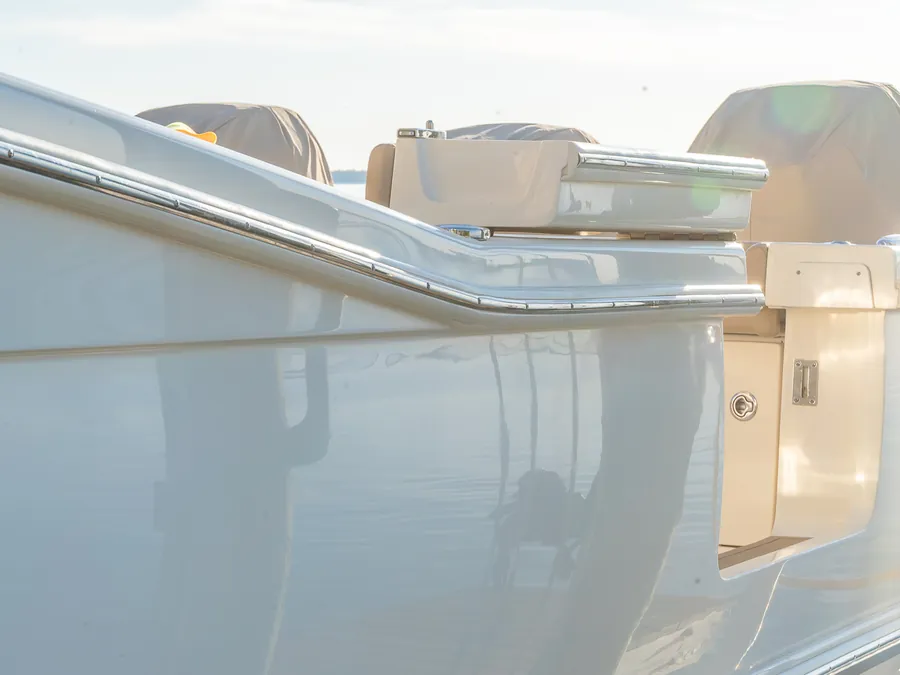
If you're searching for boat ceramic coating in Tarpon Springs, you already know what Florida's salt air and relentless sun can do to a gel coat over a single season. Tarpon Springs sits right at the mouth of the Anclote River, with boats running out past Anclote Key into open Gulf water on a daily basis. That kind of exposure, salt spray stacking up on your hull, UV radiation baking down from June through October, and the constant push and pull of tidal movement around the Sponge Docks, adds up fast. A quality marine-grade ceramic coating bonds directly to your gel coat, repels that salt before it can etch in, and keeps UV oxidation from turning your hull chalky and dull. Most boat owners in this area only need this service every 18 to 24 months, making it one of the smartest protection investments you can make per dollar spent. Ready to talk about your boat? Reach out to Sunrise Marine Detailing LLC and we'll walk you through the whole process, no pressure, just straight answers. For the full picture of how this fits with our marine ceramic coating, or to see how we handle a nearby spot like Tarpon Springs, keep reading.
Why Tarpon Springs Boats Need Boat Ceramic Coating
Tarpon Springs has a boating culture unlike anywhere else in Pinellas County. The Greek sponge diving heritage means this waterfront has been active for well over a century, and today the docks around the Sponge Docks area are packed with everything from 18-foot bay boats to 40-foot sportfishers and family cruisers. What all of these boats share is constant exposure to some of the most chemically aggressive water in the Tampa Bay region. The northern Pinellas coastline sits where freshwater from the Anclote River mixes with the full-salinity Gulf water pushing in from the west. That brackish, high-mineral environment accelerates oxidation, promotes waterline staining, and leaves behind the kind of salt film that a simple rinse with a garden hose just won't fully remove. Boats sitting in wet slips at the Tarpon Springs Yacht Club or on lifts along Whitcomb Bayou are exposed to this mix day and night, every day of the year. A marine ceramic coating creates a sacrificial layer that sits on top of your gel coat, absorbing that chemical punishment instead of letting it sink into your boat's finish.
The sun angle and duration here is another major factor that a lot of boat owners underestimate until they start seeing the damage. Florida sits at a latitude where UV index values regularly hit 10 or 11 from May through September. A white gel coat that looked perfect when you bought the boat can start showing chalking and oxidation within two or three seasons if it's stored uncovered on a trailer in a sunny lot or sitting in an open wet slip. The oxidation process is gradual, which is why so many boat owners don't notice it until the hull looks visibly gray and flat in the sunlight. At that point, you're looking at a full compound and polish before a ceramic coating can even be applied. Staying ahead of oxidation with a quality coating means you're protecting a surface that still has its original depth and color. That's far easier and more cost-effective than trying to restore a hull that has been neglected through multiple summers. Boats running offshore past Anclote Key are especially vulnerable because open Gulf exposure adds wind-driven salt spray on top of the UV damage.
Storage setup matters a lot in this area, too. Some Tarpon Springs boat owners keep their boats on lifts, which gives the hull a chance to dry between uses and reduces the amount of time the bottom sits in direct contact with mineral-rich water. Other owners use wet slips along canals that feed into the Anclote River system, where the hull is submerged around the clock. Even boats on trailers aren't immune, because trailer storage in this part of Florida means sitting under strong sun with no protection from salt-laden coastal air that moves inland from the Gulf. Regardless of your storage situation, a ceramic coating provides a consistent hydrophobic barrier that makes every rinse more effective and keeps salt from bonding to the surface in the first place. The coating's chemical resistance also helps protect against the fuel and oil residue that accumulates around marina fuel docks, something that is common at busy launch areas around the Sponge Docks. When you look at all of these factors together, a regular ceramic coating schedule is simply part of being a responsible boat owner in Tarpon Springs.
What's Included in Our Boat Ceramic Coating Service
- Full hull wash and salt decontamination: We start with a two-step decontamination wash that uses a pH-balanced marine soap followed by an iron and mineral remover formulated for gel coat surfaces. Salt crystals that have bonded into the surface texture are broken down chemically before any mechanical work begins. This step is critical in the Tarpon Springs environment because mineral deposits from the Anclote River estuary are some of the most stubborn we encounter anywhere in Pinellas County. Skipping this step and going straight to polish would just grind the contamination deeper into the gel coat rather than removing it properly.
- Machine compounding and oxidation removal: Once the hull is clean and decontaminated, any oxidation, swirl marks, or light surface scratches are addressed with a rotary or dual-action polisher using a marine-grade compound. This step restores the clarity and depth of the gel coat so the ceramic coating bonds to a surface that is in its best possible condition. Florida sun is hard on gel coat, and most boats that come to us after a full season outdoors need at least a one-step polish before coating. Boats that have gone multiple seasons without treatment often need a heavier cut first. We assess this during the initial inspection so there are no surprises.
- Panel wipe-down and surface prep: After compounding and polishing, every panel is wiped down with an isopropyl alcohol preparation solution to strip away any polish residue, oils from handling, or silicone contamination that could interfere with ceramic bonding. This is one of the most important steps in the entire process and one that separates a professional ceramic coating application from a consumer-grade wax job. If the surface isn't chemically clean when the coating goes on, adhesion is compromised and the durability you're paying for simply won't be there.
- Marine-grade ceramic coating application: We apply a professional-tier marine ceramic coating product that is specifically formulated for gel coat, fiberglass, and painted marine surfaces. The coating bonds at a molecular level, filling in microscopic surface imperfections and creating a glass-hard shell that water beads off of and salt cannot penetrate. This is not a spray wax or a sealant that sits on the surface. It is a true ceramic that cures hard and provides meaningful protection for up to two years under normal Gulf Coast boating conditions, including regular saltwater exposure from places like Anclote Key and the open Gulf.
- Non-skid and deck surface treatment: The topside decks and non-skid areas of your boat accumulate salt, sunscreen residue, and biological staining at a rate that surprises a lot of first-time ceramic coating customers. We clean and treat these surfaces as part of the full service, applying a ceramic formula that is safe for textured non-skid and that will make future cleanups dramatically easier. Mold and mildew have a much harder time establishing on a ceramic-coated non-skid surface, which is a real quality-of-life improvement for boats sitting in Tarpon Springs's humid slip environment.
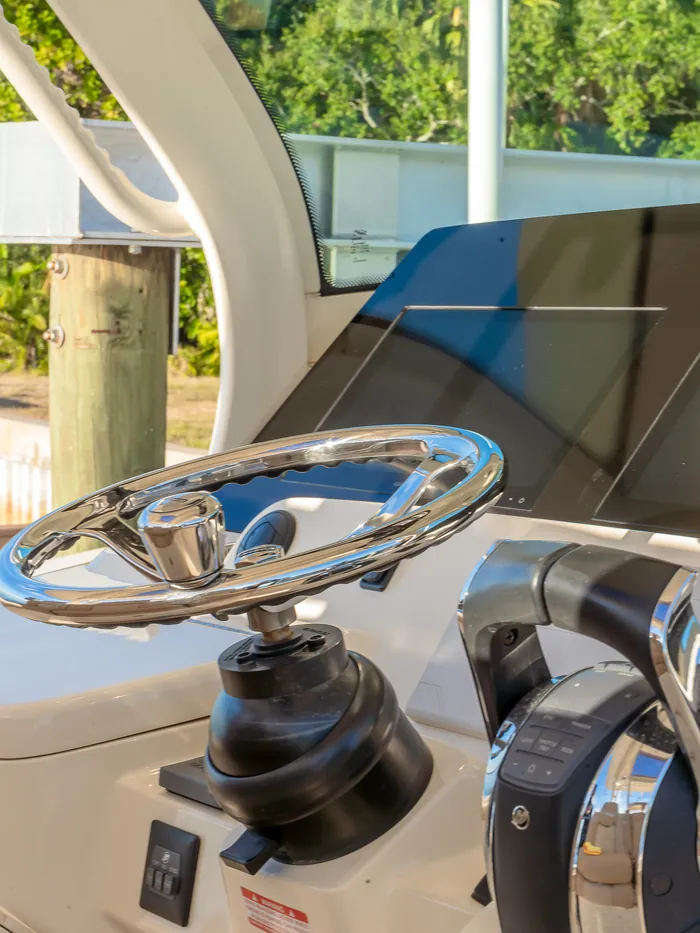
- Stainless steel and chrome brightwork protection: Railings, cleats, rod holders, and other stainless steel or chrome hardware are treated with a ceramic-compatible metal sealant that resists the rust staining and pitting that salt exposure causes on marine metals. This step is often overlooked by boat owners who only think about the hull, but oxidized stainless hardware is one of the most noticeable signs of deferred boat maintenance and one of the more tedious things to restore once it reaches a certain level of neglect. Keeping it sealed is far easier than addressing heavy pitting later.
- Final inspection and customer walkthrough: Before we consider the job complete, we do a panel-by-panel inspection in good lighting to confirm uniform coverage, check for any high spots or streaking in the coating, and verify that all trim lines are clean. We then walk the boat owner through the curing timeline, explain the first wash protocol (no soap for a defined curing window), and answer any questions about maintenance. A ceramic coating is only as good as the aftercare, and we make sure every customer leaves knowing exactly how to protect their investment going forward.
While we are at it, ask about our oxidation removal before coating, a lot of Tarpon Springs customers pair this with their detail to extend the results.
Our Process for Tarpon Springs Boats
Step 1: Initial Assessment and Conversation
Every job starts with a straightforward conversation about your boat. We ask about the length, hull material, current condition of the gel coat, how and where the boat is stored (wet slip, dry rack, trailer, or lift), and when you last had any professional detailing done. For boats in the Tarpon Springs area, we also ask how often you're running out to the Gulf and whether the boat regularly passes through high-salinity zones like the waters around Anclote Key. All of that context helps us understand what level of prep work the gel coat needs before the ceramic coating can go on. Some boats come to us in great shape and just need a light polish and decontamination. Others have been through several Florida summers without professional attention and need a more aggressive compound and correction pass before we can coat. Being upfront about this during the assessment stage means no surprises on the day of service and no awkward conversations mid-job about additional work that wasn't quoted. We want you to know exactly what to expect before we ever pick up a polisher.
Step 2: Surface Preparation and Correction
This is the most labor-intensive part of the entire ceramic coating process, and it is also the part that most directly determines how good the finished result looks and how long the coating lasts. We wash the hull thoroughly, run our decontamination protocol, and then assess the gel coat under quality lighting to determine what level of paint correction is needed. Minor surface swirls and light oxidation get addressed with a medium-cut compound and a finishing polish. More significant oxidation or heavy waterline staining requires additional passes with a heavier compound before we can move on. We pay particular attention to the waterline, the transom, and the areas around hardware fittings, because those zones accumulate the most contamination on boats that are used regularly in the Anclote River estuary and the coastal waters around Tarpon Springs. Once the correction work is complete, the surface gets a final wipe-down with surface prep solution so the ceramic has a clean, residue-free base to bond to. This step cannot be rushed without compromising the quality of the coating.
Step 3: Ceramic Coating Application
With the surface properly prepped, we apply the marine-grade ceramic coating in carefully controlled sections, working panel by panel to ensure even coverage and to prevent the coating from flashing before it can be leveled. The product is applied with a dedicated applicator block and microfiber cloth, then leveled with a separate clean towel before it bonds. Working in sections also allows us to maintain consistent film thickness across the entire hull, which matters for both the appearance and the durability of the finished coating. We work in shaded conditions whenever possible because direct sunlight and high ambient temperatures can cause the coating to flash too quickly, creating high spots that are difficult to remove after the fact. For boats kept in Tarpon Springs, we typically schedule coating days for early morning starts to take advantage of cooler surface temperatures before the afternoon heat builds. The application itself is methodical and precise work, and we do not cut corners to save time.
Step 4: Curing, Inspection, and Customer Handoff
Once the coating is applied, it enters an initial cure phase that requires the surface to remain dry and free from contact for a defined window of time. We place protective covers or rope off the work area where practical to prevent accidental contact during this period. After the initial cure window has passed, we do our final panel inspection in good-quality lighting, looking for any irregularities in the coating surface and addressing them while correction is still possible. The boat is then re-inspected at the customer walkthrough, where we go over every section of the hull and deck together. We explain the full curing timeline, which typically involves a longer period before the first wash, and we go over the recommended maintenance products and intervals to help you get the maximum life out of the coating. Most Tarpon Springs customers are back on the water quickly, and many notice the difference in how the hull sheds water the very first time they run through the channel toward the Gulf.
Boats and Marinas We Service Around Tarpon Springs
Sunrise Marine Detailing LLC serves boat owners throughout the Tarpon Springs waterfront and the surrounding canal and bayou systems. We come to you, whether that means pulling into a marina, working at a private dock, or meeting you at a dry rack storage facility. The Tarpon Springs area has a rich and diverse boating community, and we've worked on everything from classic wooden sponge boats to modern center-console offshore rigs to family pontoons and sailboats. Below are some of the specific locations and vessel types we regularly service in this part of Pinellas County.
- Anclote River corridor: Many of Tarpon Springs's private docks sit along the canals and tributaries that feed into the Anclote River. Boats stored here are in a mixed-salinity environment that changes with tides and rainfall, creating unique contamination challenges that our decontamination protocols are specifically designed to address.
- Sponge Docks area: The historic Sponge Docks waterfront is one of the most recognizable landmarks in all of Pinellas County. Working boats, charter vessels, and privately owned recreational boats are all common here. We service both the boat owners who live nearby and commercial operators who need their vessels looking their best for customers.
- Tarpon Springs Yacht Club: Members keeping their boats in the yacht club's slip facilities deal with daily tidal exchange and the kind of long-term wet storage that accelerates mineral staining. Our ceramic coating service is especially popular with yacht club members who want to reduce their boat's overall maintenance burden between uses.
- Whitcomb Bayou: Residential homes and private docks along Whitcomb Bayou make up a significant portion of our Tarpon Springs customer base. Boats kept in these narrower tidal waterways are often partially shaded by trees and nearby structures, but they still accumulate significant biological growth and salt contamination because the water exchange keeps fresh salt exposure coming in consistently.
- Anclote Key and offshore-use vessels: Boats that regularly run out to Anclote Key and beyond are exposed to full Gulf salinity and open-water spray conditions that are harder on gel coat than near-shore use. We pay special attention to the bow sections and deck areas of these vessels, as those surfaces take the most spray impact during offshore runs.
- Trailered and dry-stored boats: Many Tarpon Springs boat owners store their vessels on trailers or in dry rack facilities. These boats still need ceramic coating because UV exposure, salt air, and summer heat all take a toll even when the boat is not in the water. We service trailered boats at your home, your storage facility, or another agreed location.
Ready for a showroom shine?
Free quote, mobile to your dock across Tampa Bay. Same-week booking.
How Long Boat Ceramic Coating Takes in Tarpon Springs
One of the most common questions we get from Tarpon Springs boat owners is how long the whole process will take. The honest answer is that it depends on the size of the boat and the condition of the gel coat coming in, but we can give you realistic ranges based on the work we do regularly in this area.
For boats under 25 feet, including bay boats, flats skiffs, smaller center consoles, and deck boats, the full service from wash and decontamination through ceramic coating application typically takes between four and six hours for a boat in good condition. If the gel coat needs more significant correction work because of oxidation or heavy staining, add another one to two hours to that estimate. Most jobs in this size range are completed in a single day, and many can be wrapped up by early afternoon if we start at first light. Same-day turnaround is realistic and common for this size category, which is good news for Tarpon Springs boat owners who want to minimize the time their boat is out of service during the busy spring and early summer fishing season.
For boats in the 25 to 35-foot range, which covers a lot of the larger center consoles, walkaround cuddy cabins, and smaller express cruisers that are popular in this part of Tampa Bay, plan for a full day of work. Six to nine hours is a typical range, again depending on gel coat condition and the complexity of the deck layout. Boats with extensive non-skid coverage, multiple hatches, and a lot of stainless hardware take longer because each of those surfaces gets individual attention. We rarely rush through a job in this size range to make a same-day deadline, preferring to finish the next morning if needed rather than cutting corners on the coating application or the final inspection.
For larger vessels over 35 feet, including sport yachts, trawlers, larger sportfishers, and sailboats, the job typically spans two full days. The first day covers the wash, decontamination, and all surface correction work. The second day handles the ceramic coating application, the metal treatment on hardware, and the final inspection. Two-day scheduling also gives us flexibility to work in the cooler morning hours both days, which is important for coating adhesion quality during Florida's hotter months. If you keep your boat at the Tarpon Springs Yacht Club or in a covered slip that provides shade, we may be able to compress the schedule slightly, but we always prioritize quality over speed on larger vessel jobs.
Before and After: What to Expect
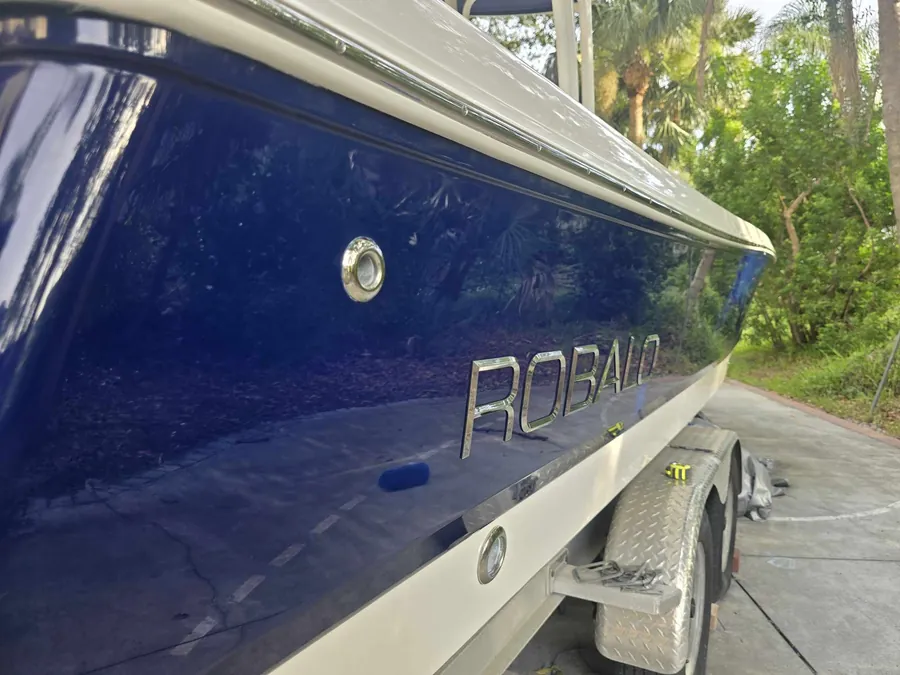
The most dramatic transformations we see are on boats that have been sitting in Florida's outdoor environment for two or more seasons without any professional attention. A white or off-white gel coat that has fully oxidized looks almost gray in flat light and has a chalky, powdery texture you can feel when you run a finger across it. That chalking is the gel coat itself breaking down at the surface level as UV radiation destroys the resin binders. When our compound cuts through that oxidized layer and exposes the fresher gel coat underneath, the difference is stark. The hull goes from dull and flat to deep, wet-looking gloss that catches light the way it did when the boat was new. Customers who haven't seen their hull in this condition for several years often react with genuine surprise. It genuinely looks like a different boat.
Beyond the hull gloss, the correction and coating process also addresses the waterline staining that accumulates on boats used regularly in the Anclote River estuary and the coastal waters around Tarpon Springs. That tan or rust-colored ring at the waterline is a combination of mineral deposits, biological growth, and oxidation that builds up over time. Our decontamination and compounding process breaks down the mineral component, while the cleaning agents address the biological staining. The result is a waterline that is clean, bright, and visually consistent with the rest of the hull. Once the ceramic coating is applied over that clean surface, future waterline buildup is slower to accumulate and significantly easier to rinse away. Many customers tell us that a simple freshwater rinse after each use keeps the waterline clean between full washes in a way that was impossible before the coating was applied.
The non-skid deck surfaces also undergo a noticeable improvement that surprises many customers who weren't expecting it. Non-skid texture tends to trap sunscreen, salt, fish blood, and biological residue in its pores, giving the deck a grimy, discolored appearance that makes the whole boat look older and less maintained than it actually is. Our cleaning and ceramic treatment process pulls that accumulated grime out of the texture and then seals the surface so future contamination sits on top rather than in the pores. The result is a deck that looks cleaner, feels cleaner underfoot, and stays cleaner much longer between washes. For boats with teak accents or brightwork rails, the metal and surface treatments bring back the clean, bright appearance that contrasts sharply with a dull or rust-stained look. The overall impression when you step back and look at a freshly coated boat is that it has been fully renewed, not just washed.
What Tarpon Springs Boat Owners Ask
How do I schedule a boat ceramic coating appointment in Tarpon Springs?
Scheduling is simple and low-pressure. You can reach us by phone, text, or through the contact form on this page. We'll start with a quick conversation about your boat, where it's kept, and roughly what condition the gel coat is in. If you can send a few photos of the hull and deck, that helps us give you a more accurate time estimate before we even show up. From there, we'll find a date that works for your schedule and the weather forecast. We work at your location, whether that's a private dock, a marina slip, or a storage facility, so you don't need to haul the boat anywhere. Most Tarpon Springs customers find the scheduling process takes no more than one short phone call or a few text messages.
What types and sizes of boats do you work on?
We work on virtually all fiberglass and gel coat vessels, including bay boats, center consoles, walkaround cabins, express cruisers, pontoon boats, sailboats, trawlers, and larger sport yachts. Boat size is not a limitation as long as we have enough room to move around the vessel safely at your location. We regularly service boats from 15-foot bay boats up through 50-foot-plus cruisers in the Tarpon Springs and greater Pinellas County area. If your boat has a painted hull rather than gel coat, such as an Awlgrip or LP topside paint finish, we use a ceramic coating product that is specifically compatible with painted surfaces rather than the standard gel coat formulation. Just let us know what you have and we'll confirm the right approach during the initial conversation.
How often should I get boat ceramic coating in Tarpon Springs?
For most boat owners running in the Tarpon Springs area, the answer is every 18 to 24 months. The combination of Gulf saltwater exposure, high UV intensity, and the mineral-rich water in the Anclote River estuary means that even a quality marine ceramic coating will gradually be chemically depleted over time. You'll know the coating is reaching the end of its effective life when you notice water no longer beading off the surface the way it did after the initial application. At that point, a maintenance detail and fresh coating application will restore the protection and the appearance. Boats that are used very heavily and run offshore frequently, particularly those making regular trips out past Anclote Key, may benefit from a touch-up or maintenance coat at the 12-month mark. Boats used less frequently and stored in covered or shaded conditions may comfortably go the full 24 months. We'll give you an honest assessment during the follow-up window based on how the coating is holding up.
How does pricing work and how do I get a quote?
We provide free quotes after a quick conversation about your boat and timeline. There's no obligation and no sales process involved. The quote is based on the length of the boat, the estimated condition of the gel coat (which affects how much prep and correction work is needed), and the scope of the service you want. A full ceramic coating service that includes hull correction, non-skid treatment, and hardware sealing will be priced differently than a maintenance coat applied over a hull that was professionally coated within the last year and is still in good condition. Sending us a few photos of the hull before we talk makes the quoting process faster and more accurate. Reach out through the contact form, by text, or by phone and we'll get you a straightforward number based on your actual boat.
Do you work at private docks and residential waterfront properties?
Yes, working at private docks and residential waterfront properties is actually one of the most common setups we deal with in the Tarpon Springs area. Many of our customers have their boats on lifts or in wet slips behind their homes along the canals and bayous that feed into the Anclote River. We bring all of our own equipment and waste containment setup and connect to the water and power at your dock, so that we're not creating a runoff issue on your property. All wash water is captured and disposed of properly in compliance with local environmental guidelines. All we ask for is reasonable access to the boat and enough space to set up safely on the dock or seawall. If you have questions about whether your specific dock setup works for us, just describe it when you call or text and we'll let you know right away.
Service Areas Nearby
While Tarpon Springs is the focus of this page, Sunrise Marine Detailing LLC serves boat owners throughout the broader northern Pinellas County and Tampa Bay region. If you keep your boat in Holiday or New Port Richey just north along the Pasco County line, we cover those communities as well. Heading south along the Pinellas coast, we also detail boats kept in Dunedin, where the Caladesi Island and Honeymoon Island boat traffic keeps owners dealing with similar saltwater and UV challenges. Clearwater and Clearwater Beach are also part of our regular service territory, including boats kept in the Intracoastal Waterway slips and the marinas off the Clearwater Pass. Palm Harbor, which sits between Tarpon Springs and Dunedin, is another area we service frequently, with a mix of trailered boats and private dock storage along the residential canal systems there. Eastward into Tampa Bay proper, we serve the Safety Harbor area and work with boat owners whose vessels are kept along the upper bay waterfront. Whether your boat lives at a full-service marina, a private dock on a tidal creek, a dry rack storage facility, or simply on a trailer in your driveway, our mobile service model means we come to the boat rather than making you haul it somewhere. If you're in any of these communities and have been searching for a quality ceramic coating service with real knowledge of the Tampa Bay salt environment, we're the crew for the job. We understand the specific challenges of boating and boat storage across this entire stretch of Florida's Gulf Coast, and that local knowledge shows up in the quality of our work.
We also serve nearby areas, see Indian Shores or Harbor Bluffs for the same boat ceramic coating work.
Get a Free Quote
If your boat is kept anywhere in Tarpon Springs, along the Anclote River, near the Sponge Docks waterfront, or out in the canal and bayou systems that wind through this part of Pinellas County, Sunrise Marine Detailing LLC is ready to help you protect it properly. Getting a free quote is easy: text us a few photos of your hull, give us a call, or fill out the contact form below and we'll get back to you quickly. No pressure, no complicated process, just a straightforward conversation about your boat, what it needs, and when we can get it done. Reach out today and let's take care of your boat the right way. Call (727) 297-8866 schedule a free quote, or see what other Tarpon Springs owners say.