 Sunrise Marine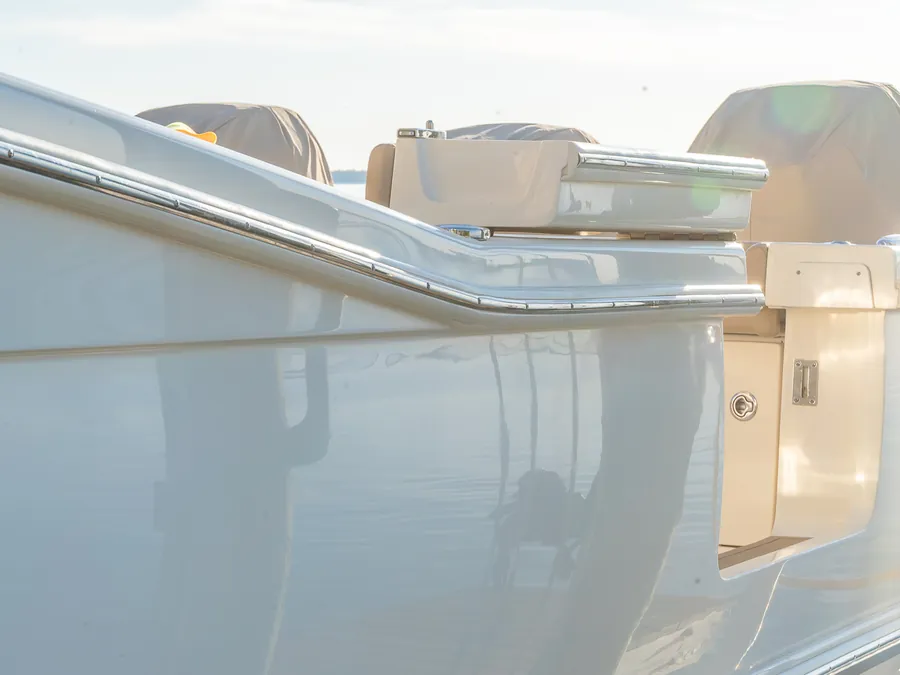
If you're searching for boat ceramic coating in St Pete Beach, you already know what the Gulf and bay do to a hull around here. The combination of intense Florida UV, heavy salt exposure from Boca Ciega Bay and the open Gulf, and the daily wet-dry cycles that come with dock storage in this area will oxidize gel coat faster than almost anywhere else in the country. St Pete Beach boats sit in some of the most corrosive marine environments in Florida, and once that chalky white oxidation sets in, it costs significantly more to reverse than to prevent. Marine-grade ceramic coating creates a semi-permanent protective layer that bonds directly to your gel coat, repels saltwater minerals before they can etch the surface, and blocks the UV radiation that turns a bright hull into a dull, faded mess. Whether you run a center console out through Blind Pass on weekends or keep a sport cruiser on a lift near the Don CeSar, our ceramic coating service is built specifically for the conditions boats face in this part of Pinellas County. Reach out today to get a free quote and find out what protecting your hull actually looks like for your specific boat and storage situation. For the full picture of how this fits with our marine ceramic coating, or to see how we handle a nearby spot like St. Pete Beach, keep reading.
Why St Pete Beach Boats Need Boat Ceramic Coating
St Pete Beach sits right at the intersection of Boca Ciega Bay and the Gulf of Mexico, which means boats kept here are exposed to two distinct saltwater environments every single time they go out. The bay side tends to have warmer, shallower water with higher salinity concentrations, especially during summer when evaporation rates are high. That warm, salty water clings to hulls, gel coat, and hardware, and when the sun hits it, it bakes right into the surface. The Gulf side, accessed through Egmont Channel and Blind Pass, adds wave chop, spray, and wind-driven salt mist on top of that. Even boats that never leave the dock get blasted by salt-laden air on a regular basis. That kind of exposure compounds over time, and unprotected gel coat simply cannot hold up to it without serious maintenance intervention every season. Ceramic coating addresses this at the molecular level by creating a hydrophobic surface layer that causes water, salt, and biological growth to bead off rather than bond to the hull.
The sun angle in St Pete Beach is also a specific concern that boat owners sometimes underestimate until they see the damage. Florida's UV index routinely hits extreme levels from March through October, and boats stored in uncovered slips or on open lifts along the Boca Ciega Bay shoreline take the full brunt of that radiation from above and reflected off the water below. Double-sided UV exposure is genuinely brutal on gel coat. Oxidation in this environment does not just look bad. It compromises the structural integrity of the outer layer over time, making the surface porous and much harder to clean. Once a hull gets to that chalky, pitted stage, a standard wax job won't cut it. Ceramic coating applied before the oxidation reaches that point creates a UV barrier that standard marine wax simply cannot match in terms of durability or coverage consistency. Wax breaks down in months. Ceramic coating, properly applied to a well-prepped hull, holds for up to two years in conditions exactly like the ones St Pete Beach dishes out every summer.
Storage setup matters here too. A lot of St Pete Beach boat owners use floating docks or fixed slips along the bay and canal systems that connect to Boca Ciega Bay. Boats sitting in the water full-time accumulate growth on the hull bottom, but they also collect salt residue, diesel exhaust film from marina traffic, and mineral deposits from brackish water on the waterline and above. Boats on lifts get better airflow but face more direct sun and more spray exposure during windy afternoons. Either way, the topside gel coat and hull sides take a beating that requires more than a seasonal rinse and a coat of paste wax. Center consoles, flats boats, and offshore fishing boats in the 20 to 32 foot range make up a huge portion of the local fleet in this area, and those boats often have large horizontal surfaces including t-tops, consoles, and livewells that collect UV damage and salt residue simultaneously. Ceramic coating those larger surface areas creates a continuous protective barrier that dramatically cuts down on the time and effort required to keep a working boat looking clean and maintained between details.
What's Included in Our Boat Ceramic Coating Service
- Full hull wash and salt decontamination: Before anything protective goes on the boat, we do a thorough two-stage wash that starts with a dedicated marine degreaser to cut through diesel exhaust film, sunscreen residue, and biological buildup. We follow that with a pH-balanced boat soap applied at low pressure to pull salt crystals and mineral deposits from the gel coat without stripping any existing protection. This stage alone makes a visible difference because it reveals the true surface condition underneath all the contamination that accumulates in a saltwater environment like Boca Ciega Bay.
- Iron and mineral deposit removal: Salt isn't the only threat to gel coat in this area. Iron particles from dock hardware, anchor chains, and marina runoff embed themselves into porous gel coat surfaces and start oxidizing from the inside out. We use a dedicated iron-removal product that chemically reacts with embedded ferrous particles and turns them purple so you can actually see them lifting out of the surface. This step is critical before ceramic coating because any contamination left in the gel coat will be sealed under the ceramic layer and will continue to cause damage beneath it.
- Machine polishing and oxidation correction: Depending on the current condition of your gel coat, we use a dual-action or rotary polisher with a cutting compound to remove oxidation, light scratches, swirl marks, and water spotting before the ceramic goes on. A boat that's been sitting in a St Pete Beach slip through a full Florida summer may need a heavier cut to get back to a clean, glossy surface. The polish stage is what makes the difference between ceramic coating that looks spectacular and ceramic coating that just locks in whatever damage was already there. We do not skip this step to save time.
- Marine-grade ceramic coating application: We apply a professional-grade marine ceramic coating product specifically formulated for gel coat and fiberglass surfaces. This is not a consumer spray-on product from a big box store. Marine ceramic coatings are engineered to handle the UV exposure, salt, heat, and biological growth that Florida boat owners deal with, and they bond chemically to the prepared surface rather than just sitting on top of it. The coating is applied panel by panel in controlled conditions, leveled carefully, and allowed to flash properly before we move to the next section of the boat.
- Non-skid surface treatment: Non-skid deck surfaces are often the most neglected part of a boat's cosmetic maintenance, and they are also some of the hardest areas to clean once salt and algae get embedded in the texture. We treat non-skid surfaces with a ceramic coating formulation that is compatible with textured gel coat, providing hydrophobic protection without making the surface slippery or unsafe. Properly coated non-skid sheds water and salt far more effectively than untreated surfaces, which means less scrubbing and fewer chances for mildew to get a foothold.
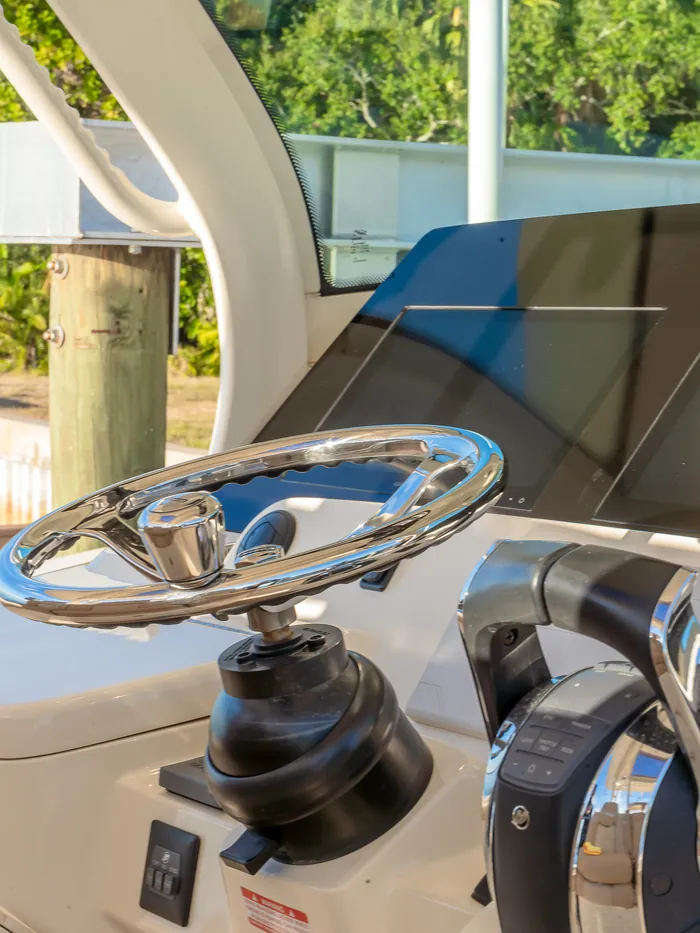
- Brightwork and hardware protection: Stainless steel rails, cleats, rod holders, and other above-deck hardware all benefit from ceramic protection. We clean and degrease metal surfaces and apply a ceramic-compatible metal coating or sealant that prevents salt pitting and the orange rust staining that bleeds down onto gel coat from neglected stainless. Teak and wood brightwork gets a separate treatment appropriate to the material. This full-boat approach means you're not just protecting the hull sides while leaving the rest of the boat unprotected.
- Final inspection and owner walkthrough: Once the coating has cured to the appropriate stage, we do a full walk-around inspection in good light to check for any high spots, streaks, or areas that need a second pass. We then walk you through what you've had done, explain the curing timeline for the first few days after application, and give you straightforward guidance on how to maintain the coating so it lasts as long as possible. We tell you what products are safe to use on a coated boat and which ones will degrade the ceramic layer prematurely, because proper aftercare is what separates an 18-month coating from a 9-month one.
While we are at it, ask about our oxidation removal before coating, a lot of St. Pete Beach customers pair this with their detail to extend the results.
Our Process for St Pete Beach Boats
Step 1: Initial Assessment and Free Quote
Everything starts with a conversation about your boat. We want to know the make, model, length, current gel coat condition, and where the boat is stored. A 24-foot center console kept on a lift at a private dock in St Pete Beach has different needs than a 38-foot express cruiser in a covered slip. When we see the boat in person, we assess the gel coat condition under proper lighting, check for existing oxidation, evaluate the non-skid, and look at the hardware and brightwork to understand exactly what prep work is going to be required before the ceramic goes on. This assessment shapes the scope of work and the quote we provide, which is always free with no obligation. We don't quote off a phone photo and show up with surprises. We look at the boat first.
Step 2: Surface Preparation
Preparation is genuinely the most important part of any ceramic coating job, and it's where a lot of shortcuts get taken by detailers who are more focused on moving to the next appointment than doing the job correctly. For boats in the St Pete Beach area, surface prep almost always includes at minimum a full decontamination wash, iron removal, and a machine polish to address whatever level of oxidation or surface marring is present. Some boats that have been neglected through a full Florida summer need a heavier compound stage before we can even start thinking about polishing to a pre-coating finish. We take the time this step requires, period. Ceramic coating applied over contaminated or oxidized gel coat is not coating protection. It's just sealing in existing damage.
Step 3: Ceramic Coating Application
Once the surface is properly prepped, cleaned of any polish residue, and confirmed to be free of contamination, we begin the ceramic application. We work section by section, applying the coating with a microfiber applicator in straight, controlled passes, then leveling the product with a clean, soft microfiber towel before it reaches full cure. The application environment matters, which is why we pay attention to temperature, humidity, and direct sun exposure during this phase. Florida heat can cause ceramic products to cure faster than intended, so we work in shaded conditions whenever possible and adjust our process based on the conditions of the day. Getting this stage right is what determines how well the coating bonds and how long it performs.
Step 4: Curing, Final QC, and Owner Handoff
After the coating is applied, it needs time to cure before the boat goes back in the water or gets exposed to rain. We communicate the specific curing window clearly based on the product used and the weather conditions on the day of the job. During the curing phase, we do our own quality control inspection, checking every panel in direct light to confirm even coverage, proper leveling, and no missed areas. Any touch-up work happens at this stage, not after the customer picks up the boat. When we hand the boat back to you, we go over the maintenance schedule, tell you exactly what the coating needs to perform at its best, and answer every question you have about keeping it looking the way it does when you walk away from us.
Boats and Marinas We Service Around St Pete Beach
St Pete Beach sits at the heart of one of the most active recreational boating zones in all of Florida. From the calm, protected waters of Boca Ciega Bay to the offshore passes and Gulf-front beaches, the local waterways draw a wide range of vessel types and boating styles. We service boats kept throughout this area, from private docks on the bay-side canals to larger marina facilities along the waterfront. Our team is familiar with the specific geography and boating patterns of this part of Pinellas County, which means we understand what your boat is actually being exposed to on a day-to-day basis, not just in theory. That local knowledge shapes how we assess hull condition, what prep work we prioritize, and how we talk to boat owners about what to expect from a ceramic coating job in this specific environment.
- Boca Ciega Bay: The primary bay system running through St Pete Beach is home to hundreds of private slips, lift systems, and floating docks. Boats here deal with warm, high-salinity water and consistent UV exposure from both above and the reflective surface of the bay. Ceramic coating is especially valuable for bay-kept boats because the constant wet-dry cycle accelerates oxidation.
- Blind Pass and Gulf-Front Access: Boats that regularly transit Blind Pass between St Pete Beach and Treasure Island take consistent wave spray and wind-driven salt mist. The repeated soaking and drying that happens during a typical Gulf run makes unprotected gel coat deteriorate noticeably faster than boats kept in calmer waters.
- Egmont Channel and Offshore Runs: Boats running out through Egmont Channel to offshore fishing grounds or the deep Gulf face the most aggressive salt and UV exposure the area offers. Full-day offshore trips mean hours of spray, sun, and surface abrasion from wave slap. These boats benefit greatly from a durable marine ceramic coating that can stand up to serious use.
- Long Key and Surrounding Waterways: The Long Key area and adjacent tidal creeks and flats attract a lot of flats fishing skiffs and shallow-draft bay boats. These light, fast boats often have large open deck areas that are particularly vulnerable to UV fading and salt etching. We regularly coat flats boats, skiffs, and bay boats in the 16 to 24 foot range.
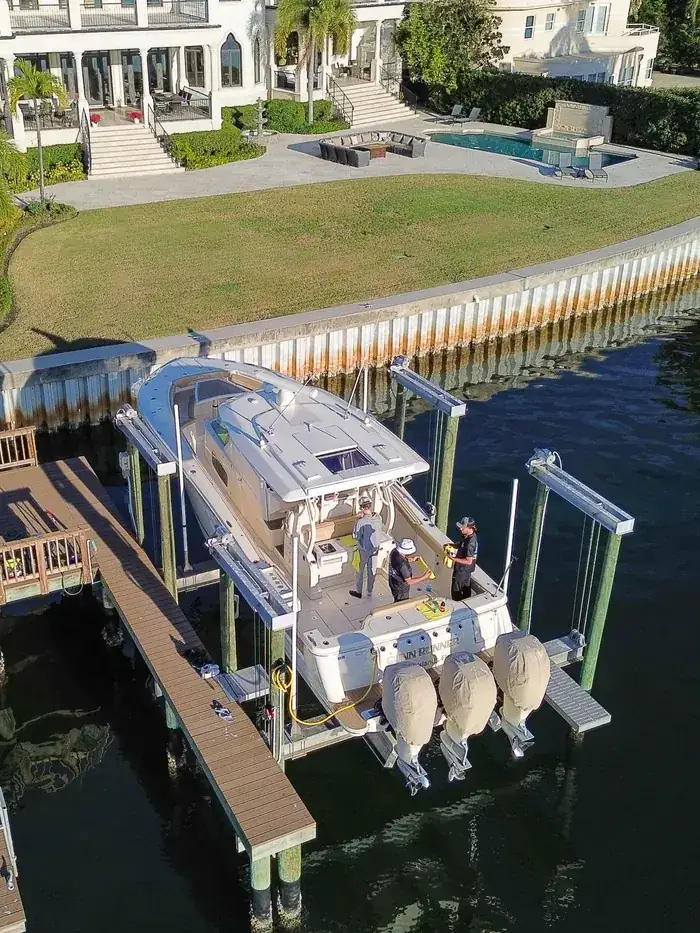
- Private Residential Docks along St Pete Beach Canals: Many St Pete Beach homes have private docks with lifts or finger piers directly on the bay-side canals. We come to you at your dock, which means your boat never has to leave its slip for the coating service. We handle the full job on-site.
- Trailered Boats Stored in St Pete Beach: Not every boat owner keeps their vessel in the water. We also service trailered boats stored in driveways, storage yards, and covered facilities throughout the St Pete Beach area. Trailered boats still accumulate UV damage and salt if they're regularly launched in the area, and ceramic coating protects them whether they're wet-stored or dry-stored.
Ready for a showroom shine?
Free quote, mobile to your dock across Tampa Bay. Same-week booking.
How Long Boat Ceramic Coating Takes in St Pete Beach
One of the most common questions we get from St Pete Beach boat owners is how long they need to plan for the boat to be out of commission during the coating process. The honest answer depends on the size of the boat, the condition of the gel coat going in, and how much prep work is required before we can apply the ceramic layer. Here is a realistic breakdown by boat size so you can plan accordingly.
For boats under 25 feet, including popular flats skiffs, bay boats, bay-style center consoles, and smaller deck boats, the full process including wash, decontamination, polish, and ceramic application typically runs between six and ten hours for a boat in reasonably good condition. For boats in this size range that are in very good shape with minimal oxidation, we can often complete the entire job in a single day, which means you drop the boat off or we come to your dock in the morning and the boat is ready by late afternoon. That said, if a boat under 25 feet has heavy oxidation, significant swirl marks from previous improper washing, or neglected non-skid surfaces, the prep work alone can add several hours to the job. We'd rather communicate that upfront during the assessment than rush the prep and deliver a compromised result.
For boats in the 25 to 35 foot range, which covers a huge percentage of the offshore center consoles, walkarounds, and express cruisers common in the St Pete Beach area, plan on one to two full days depending on condition. Boats in this size class have substantially more surface area on the hull sides, transom, deck, and hardtop, and the machine polishing phase alone takes considerably longer than on a smaller boat. Most boats in this range that come to us in good to fair condition wrap up in a long single day or a comfortable two-day schedule. Boats with serious oxidation, multiple years of deferred maintenance, or complex layouts with lots of hardware, t-tops, and built-in features take closer to two full days.
For boats 35 feet and larger, including larger sport fishing boats, express cruisers, and motoryachts, the full process typically requires two to three days. These vessels have a lot of surface area and often have more complex above-deck features that require additional masking, careful application around windows and ports, and more detailed brightwork attention. We communicate an honest timeline during the assessment phase so you're not surprised. Same-day completion is realistic and common for most boats under 25 feet in good condition, and we build our schedule to make that happen whenever the scope of work supports it.
Before and After: What to Expect
The visual transformation after a professional ceramic coating job is one of the most satisfying things you'll see as a boat owner, but it's important to go in with accurate expectations so you understand what you're actually getting. The biggest before-and-after difference most St Pete Beach boat owners notice is the return of gloss depth in gel coat that has started to oxidize. Oxidized gel coat looks chalky, flat, and faded. Colors that were once vivid look washed out. White hulls look dingy rather than clean. After the polishing and coating process, that gel coat comes back to a wet, deep gloss that many owners say makes their boat look like it just rolled out of the factory. This is not a coating effect on its own. It's the result of the oxidation correction and polishing stage working together with the ceramic layer, which then enhances and protects that restored finish going forward.
Non-skid surfaces are another area where the change is dramatic but maybe less expected by first-time customers. Non-skid gel coat in a St Pete Beach salt environment gets stained by algae, mildew, fish blood, baitfish scales, sunscreen, and embedded salt over time. Even boats that get rinsed regularly accumulate this grime in the texture of the non-skid because plain water and a quick spray-down doesn't actually lift embedded contamination. After proper cleaning and ceramic treatment, non-skid surfaces shed water in sheets rather than holding it in the texture, and the color and pattern of the gel coat come back clearly. Future cleaning becomes dramatically easier because the ceramic surface prevents the same level of contamination from bonding in the first place. A quick rinse with a hose after a day on the water actually works the way it's supposed to on a properly coated non-skid surface.
Brightwork and stainless steel hardware also look noticeably better after the service, though we want to be straightforward about one thing: if stainless has existing rust pitting or deeply etched corrosion, cleaning and sealing it will improve its appearance but will not erase physical damage that's already occurred. Stainless rails, cleats, and rod holders that are clean and sealed look crisp, bright, and salt-resistant. Teak surfaces that have been properly cleaned and treated show their natural grain and color rather than the grayish, weathered look that teak takes on when it's left unprotected in a Florida coastal environment. The overall effect of a fully coated boat sitting in the St Pete Beach sun is that it simply looks well cared-for and maintained at a level that makes other boaters ask what you did to it.
What St Pete Beach Boat Owners Ask
How do I schedule a boat ceramic coating in St Pete Beach?
Scheduling starts with a quick conversation about your boat, where it's kept, and what you're looking to accomplish. You can reach us by phone, text, or through the contact form on this page. We'll ask you some basic questions about the vessel, size, current condition, and your timeline. If the details align and you want to move forward, we set up an in-person assessment at your dock or storage location in St Pete Beach. Most boat owners find the whole process from first contact to booked appointment takes less than a day. We work with your schedule and try to fit assessments and appointments around normal boating use so your boat isn't sitting in a shop when you'd rather be on the water.
Does ceramic coating work on all boat types?
Marine ceramic coating works on fiberglass gel coat, which is the outer surface on the vast majority of recreational boats in the St Pete Beach area including center consoles, bowriders, walkarounds, express cruisers, flats boats, pontoon boats with gel coat panels, and offshore sport fishing boats. It also works on painted surfaces, aluminum, and gelcoat-over-fiberglass construction that's common on larger cruisers and motoryachts. If you have a boat with a non-standard surface material or a recent custom paint job, we'll discuss compatibility during the assessment phase. The application approach and specific product selection may vary by surface type, but in almost every case there is a ceramic coating option that makes sense for your vessel. We assess each boat individually before committing to a specific product and process.
How often should I get boat ceramic coating in St Pete Beach?
For most boat owners in St Pete Beach, a professional boat ceramic coating treatment makes sense every 18 to 24 months given the UV intensity and salt exposure the area produces. A boat that is rinsed regularly after use, stored under a cover when not in the water, and cleaned with coating-compatible products will be on the longer end of that range. A boat that sits uncovered in a south-facing slip through multiple Florida summers, gets used heavily in salt water, and doesn't get rinsed consistently after every outing will start showing the coating wearing thin closer to the 18-month mark. We'll tell you honestly during the assessment where your boat sits in terms of current coating life and what the realistic timeline looks like for your specific situation and use patterns.
How does your pricing work and how do I get a quote?
We provide free quotes after a short conversation about your boat and timeline. Pricing for ceramic coating varies based on the size of the vessel, the current condition of the gel coat, and the scope of prep work required before the ceramic layer goes on. A boat in excellent condition needs less polishing and correction work than a boat coming off a hard season with significant oxidation. Rather than publishing flat-rate prices online that don't account for those variables, we prefer to look at your specific boat and give you an accurate number that reflects the actual work required. There are no surprise add-ons after the fact. The quote we give you after the assessment is what you pay. Get in touch using any of the contact options on this page to start that conversation.
Do you come to private docks in St Pete Beach?
Yes, we absolutely service boats at private residential docks throughout St Pete Beach and the surrounding bay-side canal neighborhoods. A large portion of our work happens at private docks along Boca Ciega Bay and the tidal canal systems that run through St Pete Beach. We bring everything we need to complete the full service at your location, including all products and equipment, and we connect to the water and power at your dock. You don't need to trailer the boat to a shop or arrange for transport to a marina. We show up at your dock, do the work, and leave the area clean. If your boat is stored at a marina or dry-stack facility, we coordinate access with the facility ahead of time. Private dock appointments are often our preferred setup because the boat is in a known environment and we can control the workspace effectively.
Service Areas Nearby
While we specialize in serving boat owners right here in St Pete Beach, Sunrise Marine Detailing LLC covers the broader Tampa Bay and Pinellas County waterfront from a single operating base that keeps us close to the water at all times. We also detail boats kept in Treasure Island, just north across Blind Pass, where the canal systems and waterfront neighborhoods keep a significant number of boats in wet storage year-round. We serve Pass-a-Grille, the southernmost tip of the barrier island chain, where boats face some of the most direct Gulf exposure in all of Pinellas County. Gulfport and the Gulfport Marina on Boca Ciega Bay are also regular stops for us, and we work with boat owners in that community who keep their vessels on lifts and in the marina's wet slips. We detail boats across Tierra Verde, including vessels kept near the Fort De Soto area, where offshore fishing traffic is heavy and hull protection is particularly important. St Petersburg proper, including the waterfront areas along Tampa Bay, is also part of our regular service territory. We travel across the bay to serve Clearwater, Dunedin, and Safety Harbor as well. If you keep your boat anywhere in the greater Tampa Bay waterfront area and you're not finding us listed specifically for your neighborhood, get in touch anyway. We cover far more ground than any single service-area page can represent, and we're happy to discuss whether we can reach your dock or marina.
We also serve nearby areas, see Madeira Beach or Yacht Clubs Tampa Bay for the same boat ceramic coating work.
Get a Free Quote
If you're ready to protect your hull against another Florida season of saltwater, UV, and the relentless wear that comes with boating in St Pete Beach, we'd love to talk through what a ceramic coating service looks like for your specific vessel. Reach out to Sunrise Marine Detailing LLC by phone, text, or through the contact form below. We serve St Pete Beach and the surrounding waterways including Boca Ciega Bay, Blind Pass, Egmont Channel, and the broader Pinellas County coastline. Tell us about your boat, where it's stored, and what your timeline looks like, and we will get back to you quickly with a free, no-pressure quote based on your actual needs. Call (727) 297-8866 schedule a free quote, or see what other St. Pete Beach owners say.