 Sunrise Marine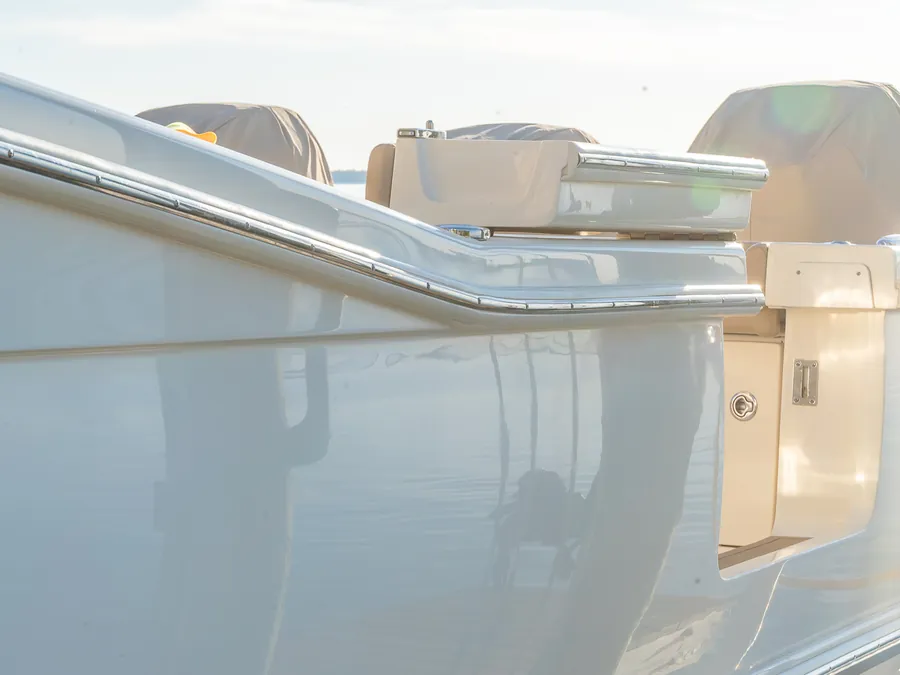
If you're searching for boat ceramic coating in Belleair Beach, you already know what Florida saltwater does to a gel coat left unprotected. Boats kept along the Belleair Beach Causeway and around the Belleair Causeway Marina take a beating every single season. The combination of intense Gulf UV, tidal salt spray, and warm humid air breaks down unprotected gel coat faster than almost anywhere else in the country. A quality marine-grade ceramic coating bonds directly to that gel coat surface, creating a hydrophobic barrier that sheds saltwater, resists UV oxidation, and keeps your hull looking sharp between trips. If you're ready to stop waxing every few months and start protecting your boat the right way, reach out to Sunrise Marine Detailing LLC today for a free quote. For the full picture of how this fits with our marine ceramic coating, or to see how we handle a nearby spot like Largo, keep reading.
Why Belleair Beach Boats Need Boat Ceramic Coating
Belleair Beach sits on a narrow barrier island flanked by the Gulf of Mexico to the west and the Intracoastal Waterway to the east. That geography means boats here get hit from both sides. You've got open Gulf exposure during runs out past the Belleair Bridge, and then you're idling back through brackish Intracoastal water on the way home. The result is a constant cycle of salt contact, sun exposure, and temperature swings that chews through conventional wax in weeks, not months. Standard paste wax might last six to eight weeks in a northern freshwater lake. Down here, on a boat that goes out two or three times a week through June and July, you're lucky to get four weeks of real protection before the surface starts looking dull and chalky again.
The docking situation in Belleair Beach also matters a lot when it comes to surface protection. Some boat owners keep their vessels on lifts along private canals off the Intracoastal, which helps reduce waterline fouling but still leaves the hull, topsides, and deck exposed to direct afternoon sun every single day. Others keep their boats wet-slipped at facilities near the Belleair Causeway Marina, where the hull sits in warm, saline water around the clock. Wet-slipped boats accumulate biological growth, waterline staining, and salt mineral deposits at a much faster rate than trailered or lifted boats. Ceramic coating doesn't replace antifouling bottom paint for boats that stay in the water full-time, but it dramatically slows the oxidation of the topsides, the gel coat above the waterline, the non-skid deck surfaces, and any fiberglass consoles or hardtops. That means less scrubbing, less compounding, and a boat that looks significantly better between each cleaning session.
The boats you see most commonly in and around Belleair Beach tend to run toward center consoles in the 22 to 28 foot range, bay boats, and a solid mix of dual consoles and small cabin cruisers. Brands like Mako, Boston Whaler, Contender, Robalo, and Grady-White are common, and their gel coat finishes, while high quality from the factory, are not immune to the Florida sun. After two or three seasons of unprotected exposure, the white gelcoat on a Mako or Whaler starts to look chalky and faded, and the color fades on anything with a colored hull. Ceramic coating locks in the original gloss, slows oxidation, and gives the surface a self-cleaning quality that reduces how much work you do between trips. For a boat owner in Belleair Beach who's out fishing or cruising regularly, that time savings and that consistent clean appearance is a genuine quality-of-life improvement. It's also a real factor at resale. A boat with maintained, glossy gel coat consistently commands a better price than one that's dull and chalky, even if the mechanicals are identical.
What's Included in Our Boat Ceramic Coating Service
- Full hull wash and salt decontamination: We start with a thorough two-step wash process that combines an iron-dissolving decontamination spray with a pH-balanced marine soap. This isn't a quick rinse. We're pulling out embedded salt crystals, iron particulates from dock hardware, and any biological residue that's worked into the pores of the gel coat. If salt contamination stays under the coating, it creates microscopic lifting points that shorten the coating's bond life significantly. Getting this step right is the foundation of everything that follows, and we take the time to do it properly on every job regardless of boat size.
- Clay bar or chemical decontamination of gel coat surfaces: Even after a thorough wash, gel coat holds onto bonded contaminants that soap alone won't touch. We use marine-grade clay bars or a spray clay alternative to pull out embedded fallout, old wax residue, rust transfer from metal fittings, and any other surface contamination that would prevent the ceramic coating from achieving a clean, direct bond to the gel coat. This step leaves the surface feeling smooth and clean in a way that a wash alone never does. On boats that haven't been detailed in a while, this step alone makes a noticeable visual difference.
- Machine polish and oxidation correction: If the gel coat shows any degree of oxidation, chalkiness, or surface marring, we address that before the coating goes on. Ceramic coating seals and protects whatever surface it bonds to, which means if you coat over dull or chalky gel coat you just lock the dullness in permanently. We use dual-action and rotary polishers with marine-safe compounds to cut back the oxidized layer and restore gloss before we ever open a bottle of ceramic product. For boats with light to moderate oxidation, this step alone produces a dramatic improvement. Heavily oxidized gel coat may require a heavier compound cut, which we discuss during the assessment.
- Marine-grade ceramic coating application to hull and topsides: Once the surface is clean, decontaminated, and polished, we apply a marine-formulated ceramic coating product designed specifically for fiberglass gel coat in high-UV, high-salt environments. This isn't a consumer-grade spray sealant. The product we use forms a true chemical bond with the gel coat surface, creating a hard, hydrophobic layer that repels saltwater, resists UV radiation, and makes the surface significantly easier to clean after every trip. Application requires controlled technique to avoid high spots and ensure even coverage across the full hull and topsides.
- Non-skid deck surface treatment: Non-skid surfaces are often overlooked in a standard detail, but they accumulate salt, fish blood, sunscreen, and grime in their textured surface that a standard wash won't reach. We treat non-skid surfaces with appropriate cleaning methods before applying a ceramic product formulated for textured deck surfaces. The goal is a clean, protected non-skid that's easier to rinse after each trip without losing any of the grip that makes non-skid functional. This matters both for aesthetics and for the safety of everyone on board.
- Hardtop, T-top, and fiberglass console treatment: Any fiberglass or gel coat surface above the waterline benefits from ceramic protection, and that includes T-tops, hardtops, consoles, and fiberglass rod holders or livewells. These elevated surfaces get maximum sun exposure and are often the first parts of a boat to show UV yellowing or chalking. We extend the coating to all fiberglass surfaces above the waterline so your entire boat is protected uniformly, not just the hull sides.
- Final inspection and surface wipe-down: Before we call a job complete, we do a full walk-around inspection under good lighting to check for high spots, missed areas, or any streaking in the cured coating. Any imperfections get addressed on the spot before we return the boat. We also wipe down trim pieces, rinse any product residue from hardware, and leave the boat in a condition that's ready to photograph or put right back in the water.
While we are at it, ask about our oxidation removal before coating, a lot of Belleair Beach customers pair this with their detail to extend the results.
Our Process for Belleair Beach Boats
Step 1: Initial Assessment and Free Quote
Every job starts with a conversation. We ask about your boat's length, beam, hull material, current condition of the gel coat, and how it's stored, whether that's wet-slipped, on a lift, or trailered. For boats kept near the Belleair Causeway Marina or along the Intracoastal canals, storage setup makes a real difference in which prep steps are necessary and how much time the full job will take. We'll sometimes ask for a few photos of the hull and deck so we can evaluate the degree of oxidation before we even arrive. Based on that information, we give you a clear, straightforward quote with no surprises. There's no obligation to book, and we're happy to answer any questions you have about the process during that initial call or text exchange.
Step 2: Surface Preparation and Decontamination
On the day of service, we arrive with all our own equipment and supplies. We don't rely on marina hose bibs without permission, so we coordinate with you on access to a water source at your dock, and we handle our own wastewater management to stay within any dock or marina guidelines. The prep phase is the longest and most important part of the entire service. We wash, decontaminate, clay, and polish the boat in sequence before any coating product comes out. Rushing prep is the number one way a ceramic coating job fails early, and it's also the number one difference between a professional application and a DIY attempt. For a 25 to 30 foot center console, prep alone can take four to six hours when done correctly. We don't cut corners here because the durability of the finished coating depends entirely on what happens in this phase.
Step 3: Ceramic Coating Application
With the surface fully prepped and inspected, we move into coating application. Marine ceramic products are applied in small sections at a time, worked into the surface with an applicator pad, and then leveled before they cure. Timing matters during this step because Florida heat and humidity affect how quickly the coating flashes. We adjust our application technique and working times based on the ambient conditions on the day of the job. Belleair Beach afternoons in summer can hit conditions that require us to work in shorter sections and move faster than we would on a cooler day. Experience with these specific environmental conditions is one of the reasons local expertise matters when you're choosing a ceramic coating applicator in this market.
Step 4: Cure, Inspection, and Handoff
After the coating is applied, it needs time to cure before it gets wet. We provide clear guidance on when the boat can go back in the water or be exposed to rain. Most marine ceramic coatings reach an initial cure within 12 to 24 hours under Florida ambient conditions, with a full cure happening over the following week or two as the coating continues to harden and densify on the surface. We do a final lighting-check inspection before we hand the boat back, walking the full hull and deck surfaces to confirm even coverage and a uniform gloss level. We also talk through basic maintenance habits, like using pH-neutral soap for future washes and avoiding pressure washing the coated surfaces directly, so the coating gets maximum longevity from day one.
Boats and Marinas We Service Around Belleair Beach
Sunrise Marine Detailing LLC works throughout the Belleair Beach area and the waterways that connect to it. We're familiar with the access points, dock setups, and the specific conditions that boats in this part of Pinellas County deal with day in and day out. Whether your boat lives on a private lift, in a community dock slip, or you trailer to a nearby ramp for each trip, we can work around your setup and schedule. Here's a breakdown of the specific locations and boat types we regularly service in and around Belleair Beach:
- Belleair Causeway Marina: We service boats kept at and around the Belleair Causeway Marina regularly. Wet-slipped boats here deal with constant waterline exposure, and the topsides get relentless afternoon sun from the west. Ceramic coating on the topsides of boats at this location makes a significant visible difference within the first few months.
- Private canal docks along the Intracoastal near the Belleair Beach Causeway: Many Belleair Beach homeowners keep their boats on private lifts or floating docks along the Intracoastal side of the island. We do on-site detailing at private residences throughout this area and can work around your lift schedule or coordinate a specific time when the boat is lowered and accessible.
- Boats that regularly cross the Belleair Bridge: Boats running out through the Belleair Bridge to the Gulf and back are logging real saltwater exposure with every trip. The spray, the wind, and the open Gulf conditions accelerate surface degradation on these boats faster than boats that stay in protected Intracoastal water. We see a lot of these boats come in for ceramic coating after an owner gets tired of watching the finish deteriorate season after season.
- The Indian Rocks area line: We service boats stored and launched from the Indian Rocks area as well, which sits just north of Belleair Beach along the same Intracoastal stretch. The water conditions are very similar and many boat owners in this area move back and forth between launch ramps and docking locations on both sides of the line.
- Center consoles and bay boats in the 20 to 30 foot range: This is the most common boat size in this part of Pinellas County, and it's also the size range where ceramic coating provides the best return on investment because these boats go out frequently, accumulate salt and UV damage quickly, and are used hard enough that appearance maintenance genuinely matters to their owners.
- Dual consoles, walkarounds, and small cabin cruisers: We also work on larger vessels kept in this area, including 30 to 40 foot walkarounds and small cabin cruisers. These boats have more surface area to protect and more complex geometry around windows, radar arches, and cabin sides, all of which we address as part of the full coating service.
Ready for a showroom shine?
Free quote, mobile to your dock across Tampa Bay. Same-week booking.
How Long Boat Ceramic Coating Takes in Belleair Beach
One of the most common questions we get from Belleair Beach boat owners is how much time to set aside for a ceramic coating job. The honest answer is that it depends on the size of the boat and the current condition of the gel coat. Here's a realistic breakdown by size category so you know what to expect before you schedule.
For boats under 25 feet, which includes most smaller bay boats, flats boats, and entry-level center consoles, a full ceramic coating service including wash, decontamination, polish, and coating application typically runs between six and ten hours of total work time. For boats in good cosmetic condition with light or no oxidation, we can often complete the full service in a single day and return the boat by late afternoon. For boats with moderate oxidation that need a heavier compound polish before coating, expect the process to run to the longer end of that range or potentially carry into a second morning for the final inspection and cure check.
For boats in the 25 to 35 foot range, which covers the most popular center consoles and dual consoles in this market, including 26 to 32 foot Grady-Whites, Contenders, and Makos, the full service typically runs ten to fourteen hours of work. Most boats in this size range are completed in a single long day, though we sometimes split the work across two days when the boat needs significant oxidation correction on a larger surface area. We coordinate timing based on your schedule and whether the boat needs to be back in the water by a specific date.
For boats 35 feet and above, including larger walkarounds, express cruisers, and offshore boats, plan for fourteen hours or more depending on the condition and complexity of the surfaces involved. Boats with large cabin sides, hardtops, multiple decks, or significant teak or wood components that need separate treatment add time to the overall job. We give you a realistic time estimate during the quoting process so there are no surprises.
Most small to medium center consoles and bay boats common to the Belleair Beach area, those in the 20 to 28 foot range, are completed same-day in a single session. We arrive in the morning, complete all prep and application steps during the day, and have the boat ready for inspection and handoff before the end of the afternoon. That means minimal disruption to your boating schedule and a boat that's ready to go back out in 24 hours.
Before and After: What to Expect
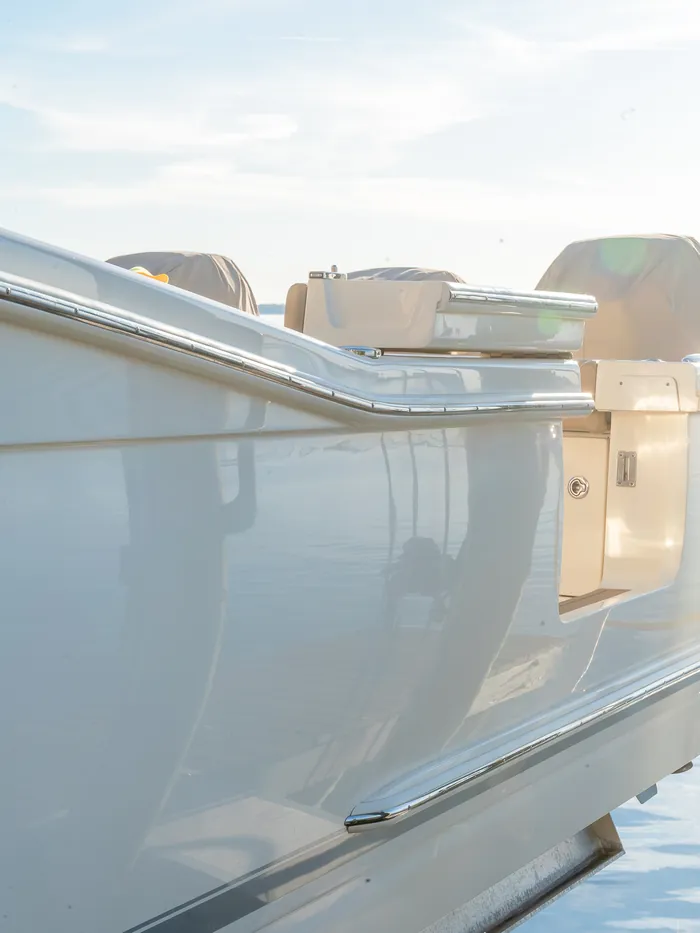
If your boat has been sitting through a Florida summer or two without a professional detail and coating, the transformation after a ceramic coating service is dramatic. The most obvious change is in the gel coat gloss. Oxidized gel coat has a chalky, almost powdery appearance when you run your hand across it. The original white looks more gray than white, and any colored accents or hull paint look faded and washed out. After we compound and polish that surface back to its original depth and then seal it with ceramic coating, the white returns to a bright, wet-looking gloss and the colors come back to something much closer to what they looked like when the boat was new. It's one of those transformations that photographs well but looks even better in person, especially in direct sunlight on the water.
The second major change most boat owners notice is in how the surface interacts with water. Before coating, water sits on the gel coat surface in flat sheets, carrying whatever salt, pollen, and debris it picked up with it as it dries and leaves a residue behind. After ceramic coating, water beads up into tight, round droplets and rolls off the surface quickly. That hydrophobic effect means that after a trip through the Gulf or a quick afternoon rainstorm, a coated boat sheds most of its surface water without any action from you. A quick rinse with a hose is usually enough to leave the boat looking clean. Salt residue that used to need scrubbing with a sponge now rinses away without effort because there's nothing on the surface for it to bond to. For boat owners who were spending 30 to 45 minutes washing down after every trip, this is a genuinely noticeable time savings that adds up quickly over a full season.
The non-skid surfaces also look significantly better after treatment, though the change there is more about cleanliness than gloss. Non-skid that's been accumulating salt, sunscreen, fish blood, and bait residue for a season or two looks discolored and stained even after a basic wash. After we deep-clean and treat it, the texture looks crisper, the color looks more uniform, and the surface feels clean in a way that's hard to describe but easy to appreciate when you're stepping aboard. The same goes for any brightwork or stainless fittings that we clean up during the process. The whole boat looks like it's been cared for, not just washed. That first trip out after a ceramic coating service is always the one that reminds boat owners why they got into boating in the first place.
What Belleair Beach Boat Owners Ask
How do I schedule a boat ceramic coating appointment in Belleair Beach?
The easiest way to get started is to text or call us directly. We'll have a quick conversation about your boat, where it's kept, and what kind of shape the gel coat is in. If you can send a few photos of the hull and deck surfaces, that helps us give you a more accurate time and cost estimate without needing to do an in-person assessment first. From there, we'll find a day on the schedule that works for you. We work at private docks, marinas, and storage facilities throughout Belleair Beach and the surrounding Pinellas County waterways, so location is rarely a barrier. Most bookings are confirmed within a day or two of the initial conversation, and we'll confirm all the logistics with you ahead of the appointment date so everything goes smoothly on the day of service.
What types and sizes of boats do you work on?
We work on fiberglass boats from small bay boats in the 16 to 18 foot range all the way up to larger offshore vessels and cruisers in the 40 to 50 foot range. The ceramic coating process applies to any fiberglass gel coat surface, which covers the vast majority of boats used in the Belleair Beach area. This includes center consoles, dual consoles, bay boats, flats boats, walkarounds, express cruisers, and pontoon boats with fiberglass decking or fiberglass pontoon logs. If your boat has significant wood decking, painted surfaces, or Awlgrip-style linear paint rather than gel coat, we'll talk through those specifics during the assessment because those surfaces have different prep and coating requirements than standard production fiberglass gel coat. We want to make sure the product and process we use is the right fit for your specific boat.
How often should I get boat ceramic coating in Belleair Beach?
In this specific environment, the realistic service interval for a quality marine ceramic coating is 18 to 24 months. That's the range we quote based on actual real-world performance in Florida Gulf Coast conditions, which are harder on coatings than almost any other boating environment in North America. Heavy UV, high salinity, and frequent use all contribute to coating wear. Some boat owners who use their boats very heavily or keep them in a wet slip full-time push toward the 18-month end of that range. Owners who lift their boat after every use and keep it out of the water between trips often get closer to the 24-month mark before they notice the hydrophobic properties starting to diminish. The good news is that maintenance washes with a pH-neutral soap extend the coating's effective life considerably, so the way you care for the boat between coating cycles matters a lot.
How does your pricing and quote process work?
We provide free quotes after a quick conversation about your boat and timeline. There's no set price list because the right quote depends on your boat's length, beam, the current condition of the gel coat, and any specific surfaces or components you want included in the service. A boat that needs heavy oxidation correction before coating takes more time and materials than a well-maintained boat that just needs a clean and coat. We'd rather give you an accurate quote based on your specific situation than throw out a generic number that ends up being wrong in either direction. There's no obligation to book after getting a quote, and we're happy to answer any follow-up questions you have before you make a decision. Just reach out by text or phone and we'll get you a straight answer.
Do you work at private docks in Belleair Beach?
Yes, absolutely. A significant portion of our work in the Belleair Beach area happens at private residential docks along the Intracoastal canals and the waterways connected to the Belleair Beach Causeway. We bring everything we need and connect to the water and power at your dock. We'll coordinate with you on water access, where to set up our equipment, and how to handle any lift or cover situation that affects access to the boat. If your boat is on a hydraulic lift, we typically work with the boat lowered to a workable height on the lift cradles, or we can coordinate having it in a slip or floating dock for the duration of the service if that's easier. We're used to working in residential dock environments and we're respectful of your property and your neighbors throughout the process.
Service Areas Nearby
Sunrise Marine Detailing LLC serves Belleair Beach as a primary service area, and we also work throughout the surrounding communities up and down the Pinellas County coastline. We also detail boats kept in Indian Rocks Beach, just north of Belleair Beach along the same barrier island chain, where the Intracoastal conditions and boat ownership patterns are very similar. We serve Largo and the waterways and canal communities that connect to the Intracoastal between Belleair and the Indian Rocks area. We work regularly in Clearwater Beach and Sand Key, where a higher concentration of larger vessels and marina-kept boats keeps us busy throughout the year. We also service boats in Dunedin and Safety Harbor on the northern end of Tampa Bay, where freshwater and saltwater mixing creates its own set of gel coat challenges. Further south, we cover St. Pete Beach, Tierra Verde, and the communities along the Pinellas peninsula that border Tampa Bay and the Gulf approaches. If you're not sure whether we service your specific dock or marina location, just ask. We cover a broad area of the greater Tampa Bay waterway system and we work hard to accommodate boat owners throughout Pinellas County regardless of exactly where their boat is kept. The ceramic coating needs of a boat owner in Belleair Beach and a boat owner in Clearwater Beach are similar enough that we bring the same level of preparation and attention to every job across the region.
We also serve nearby areas, see Gulfport or Treasure Island for the same boat ceramic coating work.
Get a Free Quote
If you're ready to protect your boat with a marine-grade ceramic coating that holds up to the salt, sun, and constant use that come with boating in Belleair Beach, we'd love to talk with you. Reach out to Sunrise Marine Detailing LLC by text, phone, or through the contact form below. Tell us a little about your boat, where it's kept, whether that's near the Belleair Causeway Marina, on a private canal dock, or somewhere else along the Belleair Beach waterfront, and we'll get back to you quickly with a free quote and a clear picture of what the service involves. We serve Belleair Beach and the surrounding Pinellas County waterways and we look forward to hearing from you. Call (727) 297-8866 schedule a free quote, or see what other Belleair Beach owners say.